Consultation Services
Schedule an Appointment with a Dietitian
Call Us: 919-350-7000, option 1 Fax Your Referral to 919-350-8959Find Out if You're Covered by Insurance
See Insurance We AcceptAsk a Dietitian
Your Pressing Dietary Question
 A healthy lifestyle is key to prevent and treat health concerns as well as maintain, gain or lose weight to help you feel better and have more energy. WakeMed outpatient dietitians specialize in examining all aspects of your lifestyle including nutrition, sleep, physical activity and stress management to help you develop a customized plan for a healthy lifestyle.
Utilizing a whole person approach to health, our dietitians work with your current knowledge and help identify potential challenges and opportunities for positive change. We assess your readiness and barriers to change to determine the most effective way to meet your short- and long-term goals.
Success can be achieved through one-on-one counseling with a licensed, registered dietitian.
We offer convenient appointments to fit your schedule with office hours from 8 am to 4 pm.
Celiac Disease and Food Allergies
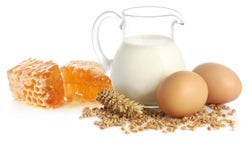 A diagnosis of Celiac disease is usually accompanied by questions about gluten and which foods are recommended and which foods need to be avoided. WakeMed dietitians can assist you with selecting healthy gluten-free foods and plan a balanced diet to meets your individual nutritional needs.
Additionally, there has been a steady rise over the past few years of individuals diagnosed with multiple food allergies. Both adults and children diagnosed with milk, egg, soy, and other allergies have a hard time selecting foods that meet their bodies' nutritional needs. Our dietitians can help make appropriate changes to your diet while still meeting nutritional needs and enjoying a full and active lifestyle.
Through extensive one-on-one counseling, dietitians can help you create a plan to avoid allergens and develop a selection of allergen-free foods.
Celiac & Food Allergy Support Group
Our support group will provide valuable information on coping and living with celiac disease and other gluten-related disorders. Learn more.
Heart-Healthy Diet
Find a Cardiologist
SearchFind a Nutrition Counselor
Learn MoreYou can lower your heart disease risk enormously by leading a healthy lifestyle. In most cases, that means following a heart-healthy eating plan, getting regular physical activity, maintaining a healthy weight, and not smoking. Some people may need to take medication to control heart disease risk factors such as high blood pressure or high cholesterol.
You can greatly improve the condition of your heart by eating healthfully.
Dietary Guidelines
The Dietary Guidelines for Americans tells you to:
- Choose a diet low in saturated fat and cholesterol, and moderate in total fat
- Choose a variety of grains daily, especially whole grains
- Choose a variety of fruits and vegetables daily
- Choose beverages and foods to moderate your intake of sugars
- Choose and prepare foods with less salt
- If you drink alcoholic beverages, do so in moderation
- The Dietary Guidelines also emphasize that you should aim for a healthy weight, by being physically active each day.
DASH Diet
Research has shown that the Dietary Approaches to Stop Hypertension (DASH) Diet is a very effective eating plan to help lower blood pressure.
The DASH approach encourages a high intake of fruits and vegetables (8-10 servings each day); a regular intake of low-fat and non-fat dairy foods (2-3 servings each day); and small servings of meat, poultry and fish (up to 2 servings each day).
Portion Sizes
Portion sizes are also vitally important.
Follow these guidelines and visit ChooseMyPlate.gov to learn more.
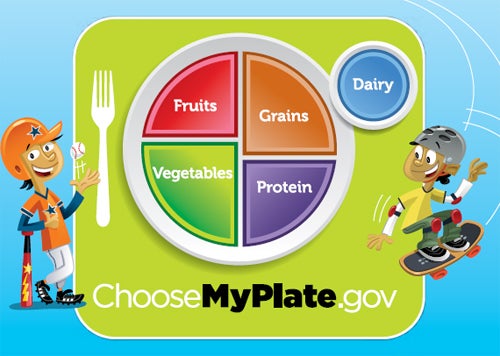

FRUITS - Fuel Up With Fruits at Meals or Snacks.
Oranges, pears, berries, watermelon, peaches, raisins, and applesauce (without extra sugar) are just a few of the great choices. Make sure your juice is 100% fruit juice.

VEGETABLES - Color Your Plate With Great-Tasting Veggies.
Try to eat more dark-green, red, and orange vegetables, and beans and peas.
GRAINS - Make at Least Half Your Grains Whole Grains.
Choose whole-grain foods, such as whole-wheat bread, oatmeal, whole-wheat tortillas, brown rice, and light popcorn, more often.
PROTEIN - Vary Your Protein Foods.
Try fish, shellfish, beans, and peas more often. Some tasty ways include a bean burrito, hummus, veggie chili, fish taco, shrimp or tofu stir-fry, or grilled salmon.

DAIRY - Get Your Calcium-Rich Foods.
Choose fat-free or low-fat milk, yogurt, and cheese at meals or snacks. Dairy foods contain calcium for strong bones and healthy teeth.
Vegetarian Diet
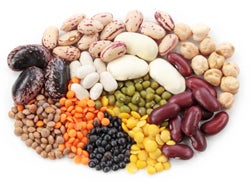 Have you decided to change your lifestyle and eat plant-based foods for your health, the environment, or ethical reasons? The challenge is making sure you are getting adequate amounts of protein, calcium, and vitamins in your diet. Our dietitians are experts at guiding you through this major lifestyle change. With detailed individual counseling, our dietitians assist people in making appropriate changes to their diets while still conforming to taste and cultural preferences.
Dietitians can provide guidance on how to modify recipes to make them healthier, introduce you to new grains, beans, greens and more, and suggest easy preparations for healthy foods to help you take this significant step towards health.
Nutrition Blogs
 Gastroenterology
Food Safety From Start to Finish
We're hearing a lot about food safety these days — lettuce and berries have been high on the radar due ...
 diet & nutrition
Eat the Rainbow: Visit Your Local Farmer's Market
If you want to enjoy the true taste of summer in North Carolina, there’s no better place than your loca...
 Children's
From Sluggish and Tired to Mighty and Strong: Valentina’s ENERGIZE! Journey
With school starting back, parents and kids probably have a lot on their checklist. Snazzy school supplie...
 diet & nutrition
11 Reasons to See a Dietitian
Medically reviewed by Olivia Watson, RDDietitians play a necessary role in your health care team, helping...
 diet & nutrition
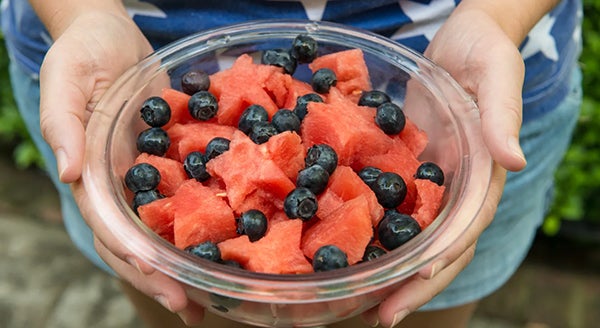
Easy, Healthy Star-Spangled Watermelon Recipes
Get ready to celebrate Independence Day with these super easy, fun and healthy “watermelon-inspired” ...
 diet & nutrition
"Could Your Gut Be the Key to Unlocking Better Mental Health?" Dietitian Parul Kharod Explains
Medically reviewed by Parul Kharod, RD, LDNEver thought about how our eating habits affect our mental wel...
 diet & nutrition
Hop into a Healthy Easter with Eggcellent Ideas from Dietitian Peyton Gorman
Spring is in the air and along with blue skies, pastel blooms and warm weather, families delight in celeb...
 Heart & Vascular
The Real Scoop on Ultra-Processed Foods
With a lot of recent news and hype surrounding ultra-processed foods, many of us still don’t know what ...