Prevention & Wellness
Tools and resources to help you and your family live a heart healthy life.
Taking care of your heart requires you to eat well, exercise regularly, understand your risk factors and manage your heart disease and diabetes.
In this section, you will find tools and resources to help you and your family do just that. When it comes to cardiac disease, prevention really is the best medicine.
Modifiable Risk Factors for Heart Disease
Everyone over the age of 20 should have their cholesterol checked at least every five years. Men older than 45 and women older than 50 may need to have their cholesterol checked every year or two, especially if they have a family history or other risk factors. Unhealthy cholesterol levels—too-high LDL and/or too-low HDL—can result from a poor diet, a sedentary lifestyle, cigarette smoking and certain medications.
Blood pressure is the pressure of the blood against the walls of the arteries. Too much pressure on those walls can damage the arteries and weaken them to the extent that they develop bulges (aneurysms). Chronic high blood pressure — also known as hypertension — can damage the heart by contributing to coronary artery disease and heart failure and can also lead to stroke and kidney damage. It is important to know risk factors, symptoms and treatment options for high blood pressure. There are lifestyle changes that can lower blood pressure.
Diabetes is a condition in which the body does not make enough insulin or the body cells cannot use insulin properly. Insulin is a hormone that helps the body use glucose (sugar) for energy. Without insulin, glucose (the body's main energy source) builds up in the blood, resulting in high blood sugar. It is important to know your blood sugar levels. There are lifestyle changes that can reduce elevated sugar levels pressure.
If you are overweight, taking off pounds can directly reduce your chances of developing heart disease. If you're overweight, even a small weight loss will help to lower your risk of heart disease and other medical conditions.
Regular physical activity is an excellent way to keep your heart healthy. Good weight-bearing activities include walking, lifting hand weights, and carrying groceries. Also helpful are activities that promote flexibility and balance, such as T'ai Chi and yoga. Here are some simple suggestions for incorporating exercise into your daily routine:
- Take the stairs versus the escalator or elevator
- Park your car further from the store entrance
- Walk to the mailbox instead of swinging by in the car
- Get rid of the remote control and move during commercial breaks
- Over-emphasize motion when vacuuming, raking, sweeping or washing the car
- Walk around the soccer field at your child's game
- Take the long way to office meetings and walk while waiting for a plane
- Get up from your computer each hour; store your sneakers underneath your desk
- Walk a message to your co-worker versus email
- Buy a pedometer and aim to get the recommended 10,000 steps per day
Cigarette smoking is the main preventable cause of death and illness in the United States. Smoking can negatively affect your heart, blood vessels by damaging your blood vessels and increasing your risk of atherosclerosis – better known as hardening of the arteries. Smoking is especially a major risk factor for heart disease when combined with other risk factors like high blood pressure, high cholesterol and obesity. You can quit smoking. Quit with WakeMed can help.
Stress is your body’s reaction to a challenge or demand. Stress causes an increase in your blood pressure and heart rate, and it also causes the immune system to produce an inflammatory response. If inflammation is persistent and widespread, it can contribute to the buildup of plaque in your blood vessels. All of these responses to stress may increase your risk for heart disease, heart attack and stroke. It's important to understand how stress can affect your health and to learn ways to manage it.
A heart healthy diet is low in saturated fats and high in fruits and vegetables. A dietitian can work with you to assess your current eating habits and lifestyle, while taking into account your medical history and medications to help you adopt a heart healthy life. Your heart will thank you.
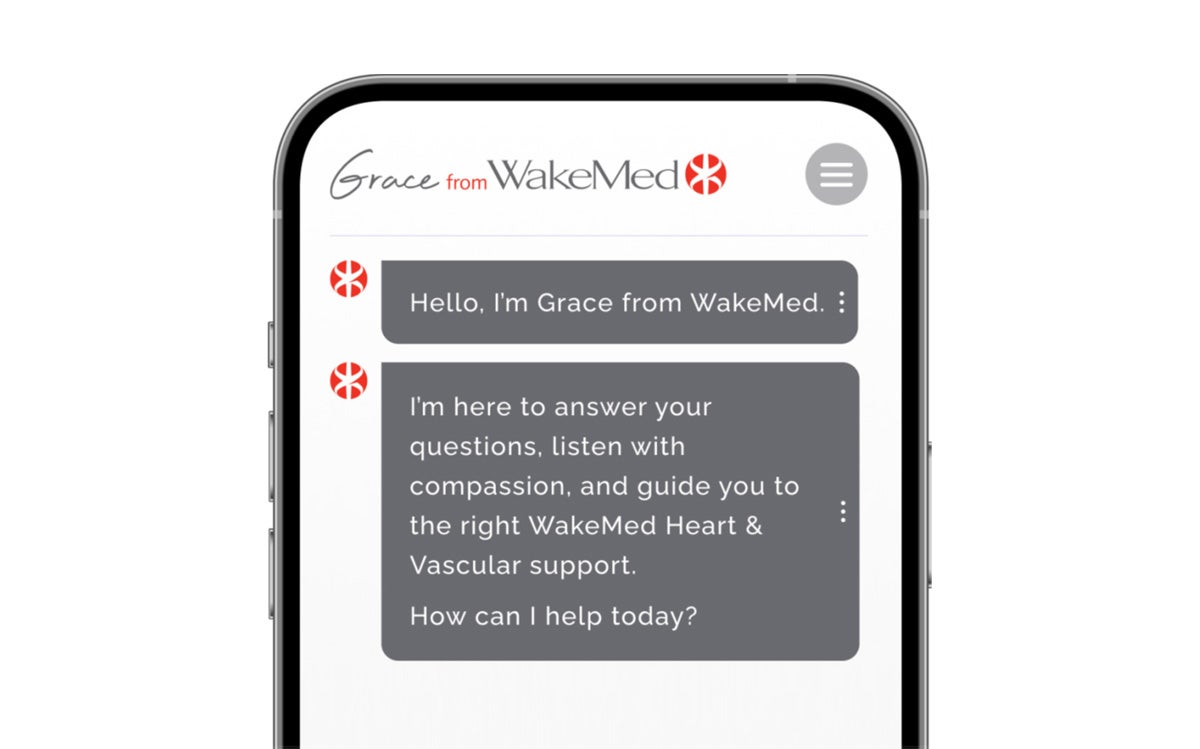
Meet Grace
Grace, an AI-powered digital care companion created by WakeMed, helps patients and families navigate heart and vascular care with confidence and compassion.
Available anytime, day or night, using your smartphone, tablet or computer, you can ask Grace to:
- Answer questions about symptoms and conditions
- Help you understand tests, treatments and care options
- Guide you to WakeMed Heart & Vascular resources
- Direct you on when and where to seek care
Heart Health Education
At WakeMed we are committed to helping you become heart healthy. Please take advantage of these classes, programs and resources to help you and your family stay heart healthy.
- Heart to Heart Magazine
- Congestive Heart Failure Program
- Cardiac Rehab
- Cardiac Support Group - Mended Hearts
- Diabetes Education
- Group Exercise Classes - Healthworks
- Women & Heart Disease
WakeMed physicians and staff take pride in spending quality time getting to know our patients and their families, which allows us to deliver your patients the most personalized, individual care possible based on their unique medical history and condition. We offer general cardiology services to diagnose your cardiac condition and manage the disease all the way through the most complex, leading-edge invasive procedures for medically fragile patients.
Specialty Physicians
- General & Interventional Cardiology
- Advanced Heart Failure
- Peripheral Vascular Disease
- Vascular Surgery
- Cardiovascular Surgery
- Thoracic Surgery
- Structural Heart
- Electrophysiology
- Cardiovascular Testing
Our focus is on a team approach to care, providing the right level of care at the right time based on proven, evidence-based medicine. By avoiding unnecessary testing, procedures and duplication of services we ensure our patients receive only the care they truly need. Our physicians are recognized as high-value specialists by most managed care organizations for our focus on value and quality.
Support Groups & Programs
After you have been diagnosed with a cardiac condition, the initial event or medical intervention is just part of the solution because heart disease is a lifelong condition.
At WakeMed Heart & Vascular, we are pleased to offer access to a wide range of services to help you manage your disease. These services include:
Mended Hearts of the Triangle at WakeMed
 When it comes to matters of the heart, connecting with others with similar experiences can provide hope, comfort and reassurance.
Mended Hearts of the Triangle is a peer support group. Members can also volunteer as official cardiovascular ambassadors who visit hospitalized cardiovascular patients.