Dancing with Diabetes: Analee's Story
October 2, 2025
Analee takes the stage, captivating the audience with finesse and fluidity. Each step covers the vast expanse of the dance floor, showcasing years of refinement in jazz, tap, point, ballet, lyrical, contemporary and hip hop genres. With every twist and turn, she embraces the unknown, fearlessly pushing boundaries, creating a mesmerizing performance that takes the audience on an unforgettable adventure of movement and rhythm.

A Dance with Dizzying Fatigue
This story of 14 years of dance, unraveled in a few mysterious months of severe fatigue. Despite her passion, prowess and determination, Analee found it nearly impossible to endure the rigor of movement that had always brought her joy.
Beginning in July 2024, it all came crashing down.
"I was really tired and dizzy. I had headaches too. I'd come home and take a nap. This went on for some time.

A Downward Spiral into Mysterious Illness
On January 9, 2025, Analee experienced an incident that she could not ignore.
"While rehearsing with the Broughton High School Ensemble, in a workout that was not very strenuous, I felt severely fatigued, and I almost blacked out. After class, I texted my mom and told her I was tired and thought I was going to pass out — perhaps from anemia. My mom texted back that she would immediately schedule an appointment with my doctor."
On January 14, Analee had a visit with her long-time pediatrician who took blood work. All came back normal, except her A1C test for blood sugar. The pediatrician initially thought it was a fluke, but Analee's mom, Courtney, and the provider, decided to test it again after 12 hours of fasting. This time it came back even higher.
Analee shares, "That's when I knew something was wrong. My provider consulted with Melissa Carlucci, MD, FAAP, a pediatric endocrinologist at WakeMed. She suggested doing the A1C test."
Dr. Carlucci explains, "I decided to do the hemoglobin A1C test based upon the clinical data I received from her pediatrician. Analee was born with a genetic predisposition to develop type 1 diabetes. At some point, her body encountered a "trigger" that began the autoimmune process, damaging the beta cells in her pancreas that produce insulin. Diabetics lose 90 percent of their beta cell function before developing clinical symptoms of diabetes. How long the process of encountering the trigger to clinical diabetes takes is different in every patient. With good diabetes control, my hope is for a very good long-range outcome for Analee."
A Diabetic Discovery
On January 15, Courtney and Analee received a call from the pediatrician that she would need to go to WakeMed Children's — Emergency Department immediately.
Courtney reflects, "I was shocked, but I also had flashbacks to Analee's childhood of her tendency to be 'hangry' when she needed food. There were specific things looking back where she would need to eat something right then, or she would be irritable and out of sorts. I feel her body just compensated over the years, until that day when she almost blacked out in dance rehearsal."
Care that Calmed Fear and Offered Clarity
When they arrived at the emergency department, they were immediately taken back to a room, so the care team could get to work.
"I was overwhelmed and scared. It was shocking news. I was terrified of needles, and they needed to prick my finger. My blood sugar was 418, so I needed to be admitted immediately."
Despite her fear, Analee is grateful for the compassion and patience she experienced with each care team encounter at WakeMed.
"The people were so nice. They were welcoming and reassuring, telling me that everything was going to be okay."
During Analee's hospitalization, she was officially diagnosed with Type 1 diabetes. The care team monitored her vitals and worked hard to stabilize her blood sugar. Pediatric Diabetes Services sent educators, including Chelsea Stallman, to explain the condition and how to manage it in the outpatient setting. The family also received care and information from a WakeMed social worker, a nutritionist and even a psychologist — all to ensure they would return home confident and prepared to manage this chronic condition.
"They gave my mom and me an iPad to watch videos. They also gave us a book, which had explanations of healthy foods to eat. It explained what to do when blood sugar went low or high. It explained ketones. My mom has kept that book handy since I left the hospital. She even took it on our family beach trip."
Determination to Dance Again
On January 17, Analee was discharged home from the hospital.
Her primary goal was to return to dance. Her blood sugar had been stabilized, and after a series of frightening ordeals, she desired normalcy and the joy of dance back in her life.

Analee says, "I wanted to prove myself. I was really nervous after the diagnosis. I'd never danced with diabetes, but I did great once I returned to dance, and I handled it well. I was tired from a mix of emotions and the fight to keep doing what I Ioved most."
Courtney adds, "Once she returned to dance, she rocked it out. Analee is a strong, brave child."
Early Challenges Managing this Chronic Condition
Following that major victory of dance, the first night at home was challenging. Courtney and Analee didn't have the Dexcom device for around-the-clock blood sugar monitoring. They were up much of the night ensuring it was stable.
Courtney recounts, "I had my alarm set for 3:00 am to check her blood sugar. It was like having an infant again for several weeks following her hospitalization. I didn't know what to expect because I'd never dealt with it before as it does not run on either side of our immediate family. I called WakeMed diabetes educator, Chelsea Stallman, pretty regularly at the beginning with questions. She was so supportive and helped to tweak her equation to ensure the correct doses of insulin."
The school year from January till May was a blur. Analee learned to advocate for herself more in the school setting. She missed a lot of school due to severe fatigue and would go half days a lot. To keep her motivated, they ensured Analee was always able to dance and attend rehearsals while managing the rigors of school.
"We got through junior year," explains Courtney, "but it was tough, and there were people who did not understand the condition and its impact."
Analee adds, "It was a total change for me. I had so many first in those months after I was discharged from the hospital. I had my first birthday with diabetes, my first summer with diabetes, and so many other firsts."
Plans for a Bright Future in Dance and in Life
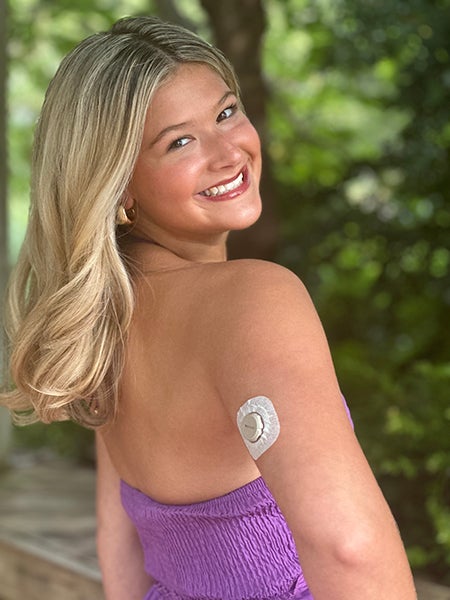
Today, Analee is the President of the Broughton High School Dance Ensemble and is also captain of the dance team. As she completes her senior year of high school, she anticipates a bright future, where dance will continue to play a role in her life, showcasing her warrior spirit to never give up, never back down and always fight for a healthy, happy life.
About Pediatric Diabetes Services
WakeMed Physician Practices – Pediatric Endocrinology provides care for children and adolescents with diabetes from birth to 18 years of age. We provide:
- ADA Standards of Care by an ADA Recognized Program
- Evidence-based diabetes management using intensive insulin therapy
- Certified Diabetes Educator (CDE)
- Diabetes Case Manager and Counselor
- Translation Services
- Comprehensive Insulin Pump Program
- Continuous Glucose Monitoring
- About WakeMed Pediatric Endocrinology
WakeMed Children's — Pediatric Endocrinology provides state-of-the-art diagnoses, treatment and management of endocrine problems for children and families throughout Wake County. Visit us at one of our locations in east Raleigh, North Raleigh, Clayton and Apex, NC.
Our board-certified pediatric endocrinologists care for a diverse population of children ranging in age from birth to 18. Our specialties include treatment of growth, puberty, pituitary, thyroid, intersex, menstrual disorders and many more.
About WakeMed Children's — Emergency Department
Specifically designed to meet the emergency care needs of children, the Children’s Emergency Department was the first freestanding facility of its kind in North Carolina and the only dedicated Children’s Emergency Department in Wake County, caring for thousands of pediatric patients every year.
A non-threatening, comfortable environment with a cheerful atmosphere, bright murals, children’s wall-art and child-sized furnishings. All this and a staff of doctors, nurses and support staff who know how to treat kids like kids, not little adults.
Children’s Emergency Department Features:
- Staffing around the clock with Board Certified Emergency Medicine Physicians
24-hour support from Wake County's only designated Trauma Center
Support and access to the doctors and specialists at WakeMed Children’s Hospital, Wake County’s only provider of inpatient care for children
Child life specialists to ease fears and calm children while they are being treated - Child-sized medical instruments and equipment
- Private treatment rooms and a child-centered approach to procedures and tests
- iPads for individual patient use
- Closed Circuit in-room kid friendly movies
- An interactive game floor in the waiting room
- X-ray rooms with day-glow scenes when the lights go out