Ben Goodrich: Emergency Pectus Excavatum Repair after Cardiac Arrest at 25
January 26, 2026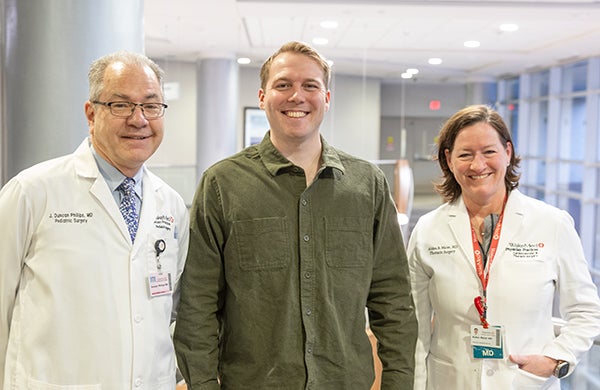
By: WakeMed Health & Hospitals
Categories: Children's, Stories, Surgery, Raleigh Campus, Physical Therapy, Adult Chest Wall, Chest Wall, Foundation
Tags: Pectus excavatum
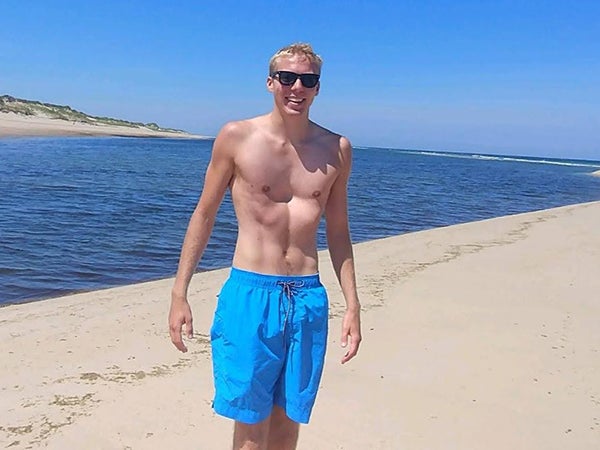
By four years of age, Ben Goodrich had a very obvious sunken chest. His grandfather had the same issue, so his parents were not too worried. To be safe, they scheduled Ben for a physical with his pediatrician.
"The pediatrician where we resided in New York told us that it was a cosmetic pectus excavatum deformation and nothing to worry about. As I aged, it grew deeper and deeper. The pediatrician kept insisting it was of no concern."
Asymptomatic Pectus Excavatum
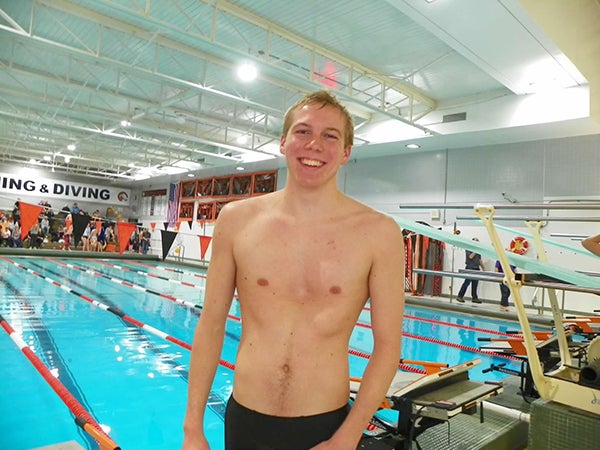
A swimmer, Ben competed in breaststroke throughout adolescence, which further molded his body into a funnel form. Yet, he believes his strong athleticism may have protected him from health challenges that often accompany pectus excavatum.
Common Symptoms:
- a fast-beating, fluttering or pounding heart;
- chest pain;
- loss of endurance that becomes worse over time;
- shortness of breath or extreme tiredness during physical activity;
- a high-pitched whistling sound made while breathing that's triggered by exercise;
- fainting or dizziness; and
- frequent infections of the upper airway. Ben was, in fact, completely asymptomatic.
"I embraced my abnormal chest. I had no negative symptoms, so it was something that made me unique. My friends and I thought it was pretty cool and joked about it throughout high school and college."
A Sudden, Near-Death Symptom
On May 22, 2025, after 25-year-old Ben graduated and relocated to the Triangle region of North Carolina, that all changed.
"After I finished college, I wanted to stay in shape since I was no longer a competitive swimmer, so I went to the gym regularly, along with climbing and hiking. One day, I was on the rowing machine in my apartment complex, a machine I've used before, and I felt fine. I noticed a neighbor was the only other person in the gym. The next minute, I awoke on the gym floor with emergency medical services (EMS) all around me.
Unbeknownst to Ben, the neighbor working out along with him in the gym that morning, was nurse Christine Murray of UNC Rex. As soon as she saw him fall off of the machine, she called 911 and began cardiopulmonary resuscitation (CPR) for the next 10 minutes, while she awaited the arrival of EMS.
"She was a lifesaver. I don't know what would have happened to me if she had not been there."
After the nurse called 911, firefighters arrived and used an automated external defibrillator (AED) to help bring Ben back from a presumed life-threatening arrhythmia (ventricular fibrillation or ventricular tachycardia).
"It only took one zap with the AED, and I woke up to see them all around me."
Collaboration for the Highest Quality, Lifesaving Care
When ambulatory services arrived, they took Ben to UNC Rex. He was quickly transported from the Raleigh location to the main hospital in Chapel Hill. The team scrambled to figure out what caused his cardiac arrest and heart attack. Determining it was his pectus excavatum, they installed a subcutaneous implantable cardioverter-defibrillator (S-ICD) to help protect his heart from another cardiac arrest.
UNC physicians then referred Ben to the WakeMed Chest Wall Deformity Center, one of only a handful in the United States. WakeMed Adult Chest Wall surgeon, Alden Maier, MD, FACS, FACCP, prepared for Ben's arrival. She consulted with J. Duncan Phillips, MD, FACS, FAAP, of the Pediatric Chest Wall Center.
Dr. Phillips explains, "At most major medical centers, there is a strict separation between the pediatric surgeons performing chest wall reconstruction (often using the Nuss procedure, or some variation) and the "adult surgeons" (often doing the modified Ravitch or similar "open" procedure). At WakeMed, surgeons have chosen a different approach: since pectus excavatum is considered a developmental deformity that has often been present since childhood, each adult patient receives care from the entire team. Both pediatric and adult surgeons work together and craft a surgical approach most appropriate to the patient. This will often be a "hybrid repair" combining both minimally invasive (Nuss) and "open" (Ravitch) techniques. I am not aware of many centers who are offering such a service to patients. Because WakeMed Children's is a "children's hospital within a hospital" (rather than a free-standing geographically separate children's facility), it is relatively easy for this type of collaboration to occur between our surgeons."
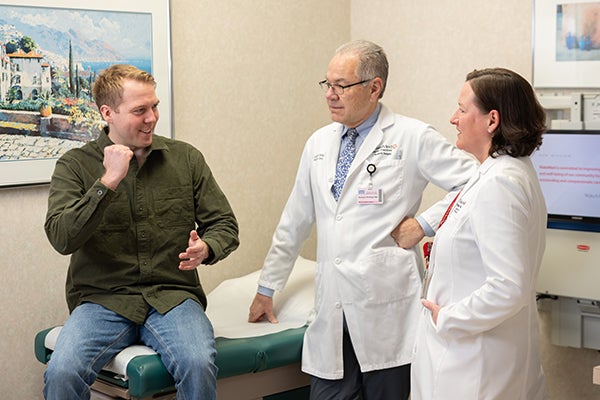
Ben met with Dr. Maier and Dr. Phillips just under a month later. They explained his cardiac magnetic resonance imaging (MRI), which showed the pectus excavatum was dangerously close to his heart.
"I was scheduled for the Nuss procedure on October 16. They needed me to wait from June to October because I aspirated blood and vomit during CPR, so they needed my lungs to clear before they could do the procedure. They also wanted my heart to recover and my body to have more stamina beforehand."
While awaiting the procedure, Ben went back to work as a full-time remote employee. He also participated in cardiac rehab near his home.
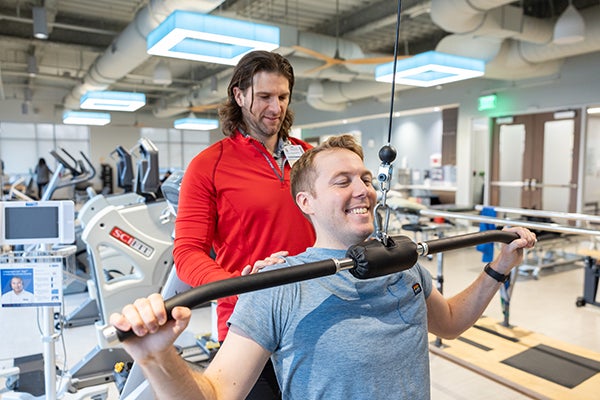
Ben jokes, "It was me and 60 to 70-year-olds doing rehab together. Rehab helped build back some of my confidence. I was nervous about physical activity because the cardiac arrest happened while I was working out."
A Transformed Body and Healing Breaths
Dr. Maier and Dr. Phillips performed the Nuss procedure at WakeMed Raleigh Campus. It took three hours because they had to remove the S-ICD prior to doing his repair and replace it thereafter. Additionally, the anesthesiology team deemed him higher risk since he'd suffered a cardiac arrest. They were very reassuring of their plan for Ben's safety and comfort throughout the procedure.
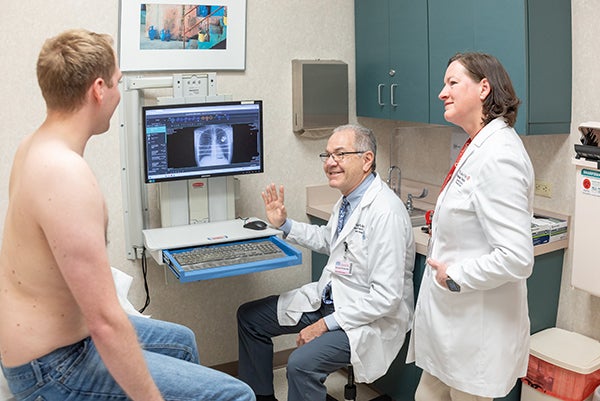
Dr. Phillips shares, "Following pectus excavatum repair, the typical improvement in cardiac output (blood flow from the heart) is about 25 percent. We would expect Ben to have a significant improvement in heart and lung function. Although patients almost always have an improved appearance and cosmetic benefit from surgery, the most important reason to undergo chest wall reconstruction is to improve cardiopulmonary status, and thus one's overall quality of life. Other benefits of working at WakeMed (in addition to being able to collaborate with "adult surgeons") is the ability to collaborate with other specialists, including radiologists (who do specialized "pectus protocol" CT scans), cardiologists and pulmonologists and anesthesiologists, who are skilled in the perioperative care and management of these patients."
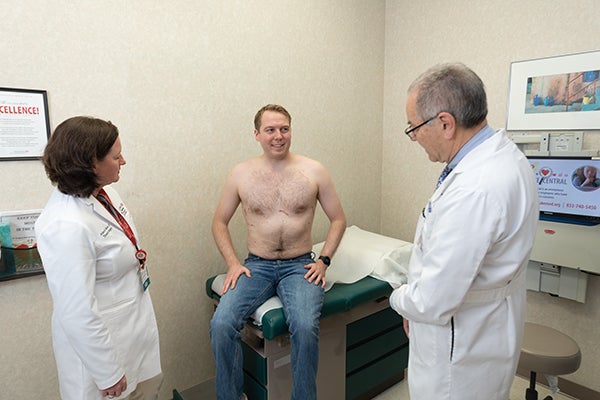
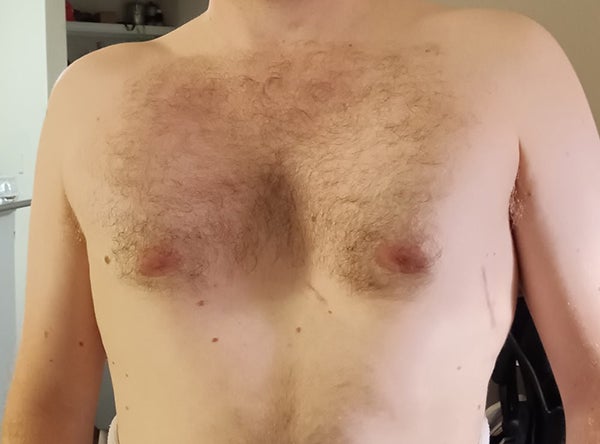
Following the procedure, Ben awoke without pain, surprised by the additional volume he felt in his chest.
"My parents came in afterwards and were immediately amazed by the transformation in my physique.
" I have more volume, so I can breathe out and in longer, taking much deeper breaths. I'm still learning my new body because everything was repositioned. My shoulders have been pushed back into their proper place, and I've gone up a size in shirts. I was really hunched over before."
Ben was discharged from the hospital on October 21. His mother remained in town for another month and a half to care for him.
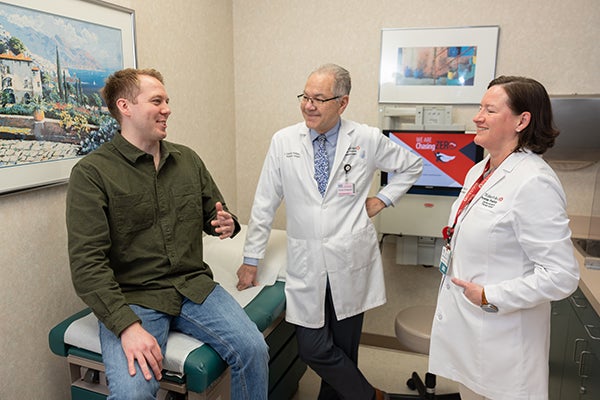
"I was disabled after surgery, with a lot of restrictions, not just from the Nuss procedure, but from the S-ICD surgery removal and replacement as well. My parents spent a few days reorganizing my apartment beforehand, making it more manageable for me to live in. My mom remained after to help me with daily care."
Ben's Life Today
Since the procedure, Ben has returned to remote work full-time. He has also joined WakeMed Outpatient Rehabilitation – Kildaire with Chris Mygrant, PT, DPT. His expected recovery window is about three months.
"I'm getting better day-by-day, and I am relearning all my muscles. I tire more easily because my body is still recovering. My back also has a lot of spasms since it is adjusting to the new placement of my muscles and my proper posture. We're working on my stamina, strength and flexibility in physical therapy, and it is a huge help. I do a lot of work with resistance bands, body-weight squats and push-ups. Eventually, I'll switch to machine and free weights."
Gratitude for Care that Puts Patients First
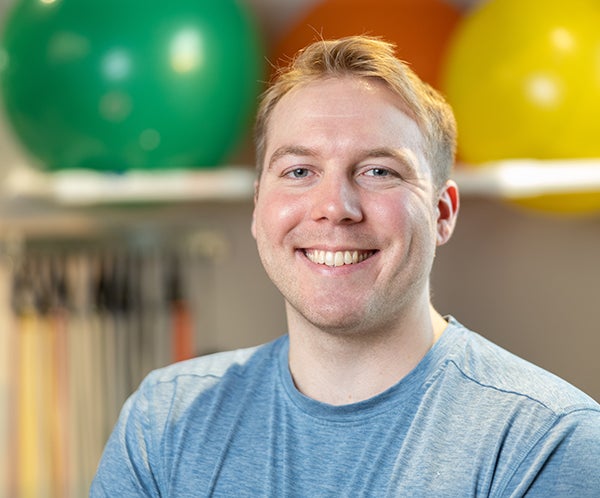
In reflecting on the lifesaving care he received and the transformative surgeries, Ben is grateful.
"The WakeMed Adult Chest Wall team provided the information and support I needed before, during and after surgery. They were excited to have me as a patient and were always smiling. The seamless communication and shared test results between WakeMed and UNC also amazed me. I felt like my health was every doctor's priority. Dr. Maier and Dr. Phillips did a fantastic job preparing me for surgery as well as giving me striking results. I'm an engineer and asked a lot of nerdy questions. They were appreciative as opposed to annoyed, and we got to have deeper conversations about the technical aspects of my surgery. Dr. Maier's nurse, Marianne Lewis, was also a tremendous help with sorting out physical therapy and other appointments. The physical therapy I received from Chris Mygrant, PT, DPT, was awesome. He was friendly, knowledgeable and attentive, helping me tremendously in my recovery."
About WakeMed Chest Wall Deformity Center
WakeMed’s Chest Wall Deformity Center brings decades of expertise helping both children and adults overcome the challenges associated with these common congenital and acquired problems. Whether you or your child has been diagnosed with pectus excavatum, pectus carinatum, Jeune’s syndrome or a rare chest wall deformity, our expert surgical and support teams can guide you through your treatment journey — every step of the way.
About WakeMed Physical Therapy
It’s our goal at WakeMed Physician Practices – Physical Therapy to get you back to your active lifestyle. Our techniques are based on national best practices to ensure you receive the latest, best treatment for your condition. We provide physical therapy and occupational therapy in Raleigh, Cary, the Brier Creek area and Apex, North Carolina.
About WakeMed Raleigh Campus
Raleigh Campus is WakeMed's flagship facility and leading provider of advanced health care services. Since its founding in 1961, the WakeMed Raleigh Campus has been a leader in offering one-of-a-kind services and the latest technology with an outstanding commitment to care and caring.