Battling Back from Stroke: JT's VNS Triumph
October 1, 2026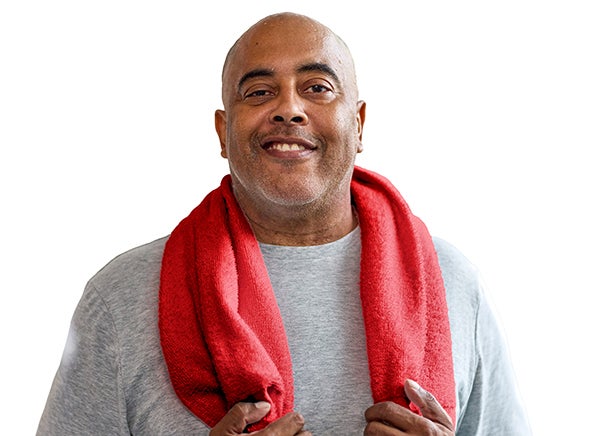
By: WakeMed Health & Hospitals
Categories: Stories, Raleigh Campus, Foundation, Physical Therapy
Tags: Ischemic Stroke, VNS
It was New Year's Eve, December 2024, and JT was in the process of purchasing a motorcycle to ring in the new year — in style.
"I'd worked at WakeMed Garner Healthplex the night before in Mobile Critical Care, transporting patients, and I should have been home sleeping. Thank goodness I wasn't asleep at home. Things would have turned out much differently."
New Year's Sensations Turned Sour
While chatting with a sales lady, JT felt a weird sensation.
"The energy suddenly drained from my body, like a switch that flipped from on to off. I paused in my request for more information on the bikes, and instead asked her, 'Am I talking funny?' She said, 'Yes.'"
JT told her to immediately call 911 and inform the dispatcher that he was having a stroke.
He shares, "I was somewhat in disbelief because I was only 55 years old. Moreover, in August, I moved to North Carolina from New Jersey to work for WakeMed Mobile Critical Care Services — a role with similar duties to my prior job of 17 years in emergency medical services (EMS) and 911 dispatching. Before that very moment, I'd felt strong and healthy."
Once the sales lady confirmed his symptoms, the store team helped him sit on the floor. While sitting, JT's symptoms resolved.
JT says, "I was thinking, 'Oh, thank goodness. It's just a transient ischemic attack (TIA).' I was then mentally prepared to go to the hospital to get checked out, but as EMS workers walked in the door, another wave of stroke symptoms hit me."
At that point, JT realized he was in a very frightening situation. What he'd hoped would be a new year of riding freely on his new bike was instead going to be encapsulated in a weakened body, fighting for his brain health in the hospital.
"The irony of it all was not lost on me. My symptoms were left-sided weakness and paralysis of my left arm. Plus, my speech was affected."
Despite the sudden shift in his plans, JT was grateful. He was glad to be in a store with competent salespeople instead of home alone. He was grateful that he was prevented from purchasing the bike. He felt the stroke was a protective omen from his deceased dad to prevent a repeat motorcycle collision. (JT had been hospitalized in 2022 due to a bike collision.) He was also thankful for his career that helped him immediately recognize signs of a stroke. Additionally, he was thankful for the EMS team who showed up quickly and expertly transported him to the hospital.
He reflects, "Being part of the WakeMed Critical Care transport division and previously working in EMS, I've helped a lot of people with active stroke symptoms. I've noted facial drooping, slurred speech and left- or right-side weakness. This time, I was the patient who desperately wanted to communicate and couldn't. Without me saying a word, they reassured me and took me to WakeMed Raleigh Campus."
Thoughts of the Future on the Ride to WakeMed Raleigh Campus
As JT rode in the ambulance, he thought about his many patients throughout the years and how they must have felt in those moments of sudden stroke.
"I could empathize in a different way because I now had lived experience. I felt overwhelmed and scared riding in the ambulance. I considered the future and how I lived alone and didn't have family close by. Questions built up in my mind about how long it would take me to recover. 'Would I be able to get back to work soon or would I have to take extended leave?' These concerns grew more ominous as we neared the hospital."
Speedy, Brain-Saving Care
The team was waiting for him when he arrived. He was taken to Imaging Services for a computed tomography (CT) scan. Upon confirming he had a right-side ischemic stroke, they immediately administered a tissue plasminogen activator (tPA), which is a clot-dissolving medication to treat ischemic strokes, restoring blood flow to the brain.
The team also asked him questions to gauge his level of disability. JT realized that while he had some trouble swallowing, he was relieved not to have any tingling or numbness in his feet. He could even wiggle his toes. He also experienced no vision loss. Even better, he'd previously arranged for his daughters to come for the first week of the new year, so by the next morning, he had their presence and support.
"I kept my optimism up pretty high," shares JT. "Slowly, things began to turn around."
JT moved from ICU after five days to a step-down unit where he remained for another three weeks. Eventually, he was admitted to the WakeMed Rehabilitation Hospital, where he worked to regain his skills — from the end of January through April 2025.
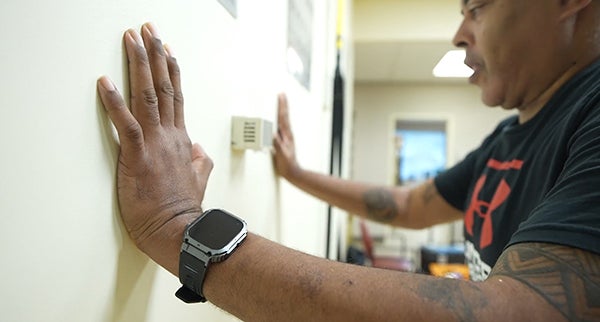
"When I got to rehab, I was able to walk — gingerly. My major concern was impeded left-hand motor skills."
JT spent several hours each day receiving occupational, physical and speech therapy. Before long, the team also added recreational therapy.
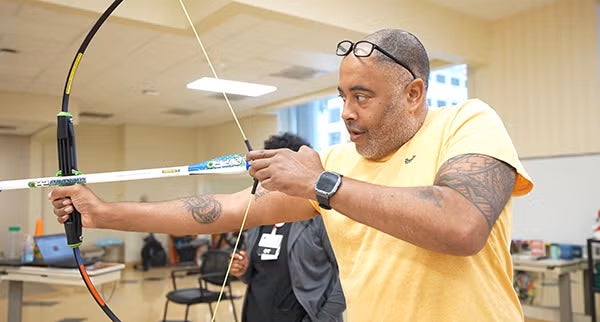
"My three main Rehabilitation Hospital therapists, Whitney Kuras, PT; Lauren Tagliatela, CCC-SLP; and Victoria Kite, OT, were amazing. They coached me and helped me regain confidence."
A Care Team that Helped Him Rediscover His Strength
JT also reflects on the personalized care offered by the nursing staff.
"They were all so attentive. A nurse even brought me Taco Bell one day. Anything I needed or wanted, they were always helpful and concerned."
After discharge from the Rehabilitation Hospital, JT remained on leave from work. He spent his time attending outpatient rehab at WakeMed Raleigh Campus.
One day, while working out with support from his occupational therapist, Victoria, she told him about Stroke Vagus Nerve Stimulator (VNS) Rehab. She explained that it uses an implanted device to send mild electrical pulses to the vagus nerve in the neck. These pulses travel to the brainstem and various brain areas, modulating brain activity to help improve recovery after a stroke. Paired with outpatient occupational therapy, it could help him regain some of his lost skills and strength.
"I was immediately like, 'Let's do it.'"
Stroke VNS Rehab
On September 7, 2025, nine months post stroke, he underwent an outpatient procedure with Robert Dallapiaza, MD, a neurosurgeon with Raleigh Neurosurgical Clinic to place the VNS device.
"A month later, I was back at WakeMed Outpatient Rehabilitation - Raleigh for therapy with Erin Sweeney, OT, and Amber Lewis, OT, to help me regain some ability with VNS. These ladies were very attentive to my needs and committed to working with me."
Sweeney was lead in his therapy and Amber assisted.
Sweeney says, "Being part of JT's recovery was truly amazing, and I am glad I was able to collaborate with him to meet his goals. Meeting him, knowing the research and understanding the 'why' of VNS, made it easy for me to present this emerging intervention to him. Our rehabilitation team worked with him for three months prior to his surgery and completed the necessary steps to refer him. He continued to soar from there — always ready to try whatever tasks I threw at him. We prioritized skills, such as typing, to allow him to return to active employment. I am so proud of him. I was also happy that his effort paired with VNS had a direct impact on his neuroplasticity, which allowed him to push through the plateaus. His brain will continue to learn and adapt to maximize function. JT's recovery was remarkable — and while no two strokes are alike — its fulfilling for me to help individuals return to the roles in life that mean so much to them."
JT began to show improvement right away. In fact, he was able to return to work in February 2026.
"Therapy before VNS helped me regain some fine motor strength in my left hand. I am left-handed, so I had to learn how to do things with my right hand; however, with stroke VNS rehab, I was able to hold things better in my left hand. I could use a knife to cut fruits and vegetables. I could hold a fork. I could also once again tie my own shoes."
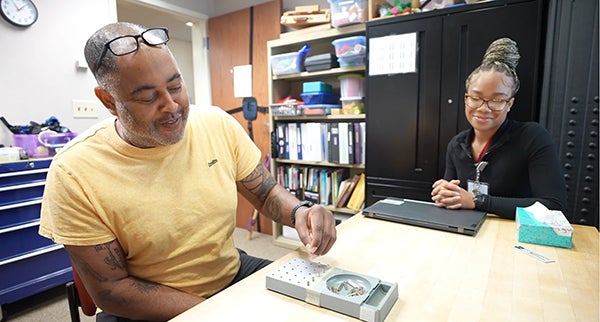
While he can no longer handle the physicality of his prior WakeMed job, he enjoys working in WakeMed Telecommunications.
Hope in Hard Places
"One thing the stroke has taught me," reflects JT, "is to make peace with my circumstances. I miss working in WakeMed Mobile Critical Care, carrying patients on stretchers and riding in the ambulance. Yet, I'm glad to still be doing important, lifesaving work."
One positive aspect of stroke VNS rehab is that JT should continue to see improvements in his strength and skills. That in mind, JT hopes to one day get back to working as an emergency medical technician. He also hopes to return to his hobbies.
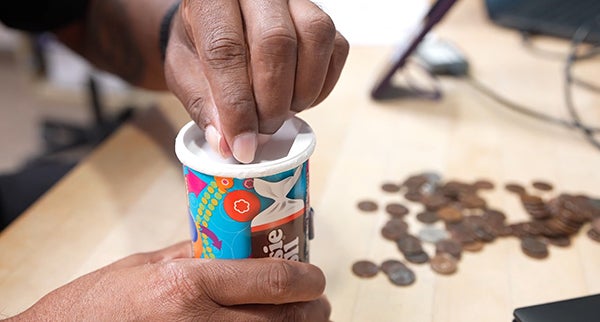
"I want to ride a motorcycle again. I like target shooting, and I miss that. I don't quite have the strength to completely pull the string back, so I've had to learn to do it with my right hand, which is challenging. I also really miss scuba diving. I have my eyes set on getting back to the things I once enjoyed."
JT accepts that recovering will take time, and there is no set timeframe on his improvements. He is grateful for the profound care he has received through WakeMed.
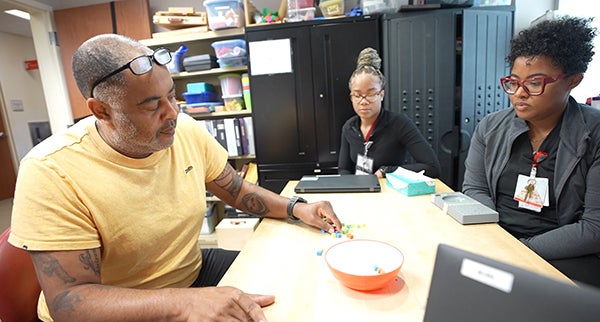
"The whole WakeMed family pushed me to recover, and they were always there for me. I know I'll keep getting better and better with the support of WakeMed."
About WakeMed Stroke Program
Our Stroke Program is distinct in providing a comprehensive approach, moving from prevention to management. Our dedicated team of specialists, renowned for their expertise, use physical medicine and rehabilitative techniques at strategic steps along the route to recovery to support the best outcomes. Here are just a few of our impressive features:
- Collaboration with EMS providers to facilitate rapid assessment and transport to the hospital
- Team approach that helps minimize time from arrival to administration of thrombolytics
- Availability of neuroradiologists for quick, expert interpretation of imaging
- Neurology and neurosurgery coverage 24 hours a day, seven days a week for evaluation and treatment
- Neuro intensive care unit for optimization of care for patients with severe strokes
- Nursing staff skilled in assessment and care of stroke patients
- Designated nursing unit for the care of patients with neurological and neurosurgical diagnoses
- Interdisciplinary care planning involving physicians, nurses, case managers, therapists and other services, such as nutritionist consultation and pastoral care
- Comprehensive post-discharge rehabilitation services, including specialty services, such as vestibular rehab to treat dizziness and vertigo
- Public education and awareness programs that focus on risk factor reduction for stroke prevention
- A variety of stroke support groups at several locations throughout North Carolina.
About WakeMed Physical Therapy
It’s our goal at WakeMed Physician Practices – Physical Therapy to get you back to your active lifestyle. Our techniques are based on national best practices to ensure you receive the latest, best treatment for your condition. We provide physical therapy and occupational therapy in Raleigh, Cary, the Brier Creek area and Apex, North Carolina.
About WakeMed Outpatient Neuro Rehabilitation
At WakeMed Outpatient Neuro Rehabilitation, our physical therapists, occupational therapists, and speech therapists excel in evaluating and treating adults and older children after stroke, spinal cord injury, traumatic brain injury, concussion, and other neurological conditions. Our practices in Raleigh, Cary and Clayton are staffed by specialty trained, passionate therapists who work one-on-one with clients to help them achieve their goals.
About WakeMed Rehabilitation Hospital
The WakeMed Rehabilitation team of accomplished professionals specialize in treating adults and children who have experienced a stroke, brain injury, spinal cord injury, orthopaedic issue, trauma, or limb loss through CARF-accredited programs. They share your goal: to regain as much independence and mobility as possible. They use the latest rehab techniques and technology and educate both patients and their family members to restore quality of life. Our medical directors also maintain lifelong relationships with patients to ensure their needs are met as they age. The WakeMed Rehabilitation Hospital, a 73-bed nationally recognized rehabilitation hospital, is located in Raleigh, NC and serves patients throughout the southeastern United States. Please call us at 919-350-7876 to speak with an Admissions representative or to schedule a tour.
About Robert Dallapiazza, MD, PhD
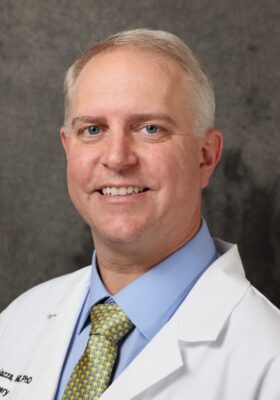 Dr. Dallapiazza joined Raleigh Neurosurgical Clinic in 2022 to start up and lead the functional neurosurgery program at RNC and WakeMed. He focuses on stereotactic, functional, and general neurosurgery. He’s also trained in deep brain stimulation (DBS), a procedure that treats movement disorders through electrodes implanted in the brain.
Dr. Dallapiazza earned his medical degree and doctoral degree in pharmacology through the Medical Scientist Training Program at the University of Iowa Carver College of Medicine. He followed that with a residency in neurosurgery at the University of Virginia School of Medicine, where he served as chief resident, and a fellowship in stereotactic and functional neurosurgery at Toronto Western Hospital in Toronto, Ontario.
He is board certified by the American Board of Neurological Surgery.
Dr. Dallapiazza has authored numerous peer-reviewed publications and contributed to several books, most recently Operative Techniques in Epilepsy Surgery. In 2021, he was named a Best Doctor by New Orleans Magazine.