Teens Taking the Wheel: Preparing Your Teen for the Road Ahead
July 6, 2026
If you’re looking in the rearview mirror and starting to think about how soon you’ll have a teen driver behind the wheel, it’s normal to wonder how you can start preparing your child for that big responsibility. While it might be too soon for your teen to take the wheel, your child is watching you and what teens see you do is a big deal.
Take your role seriously as a parent or guardian and teach safe driving habits by example. Any time you are in the driver seat with your children in the car, you are setting an example that they are likely to follow.
Start with safety.
Discuss and enforce the following rules before your teen gets into the driver seat:
- No cell phone use.
- No more than one passenger with a teen driver.
- No speeding.
- No alcohol.
- No driving or riding without a seat belt.
Visit ncvisionzero.org for more helpful tips and resources.
Also review and sign a Parent-Teen Driving Agreement. A Family Safe Driving Agreement is also available.
Create a plan together.
Start by learning together what steps are needed for a teen to become a licensed driver. Visit ncdot.gov for the latest information. Once you understand the steps needed and confirm your child is eligible, he/she will still need to meet specific criteria and receive a permit before beginning to practice with a supervising driver present. When permitted to practice driving, it can be helpful to set up a Driving Practice Plan. A sample plan can be downloaded from ncteendriver.org. The website also has communication tips for parent passengers.
Know the facts.
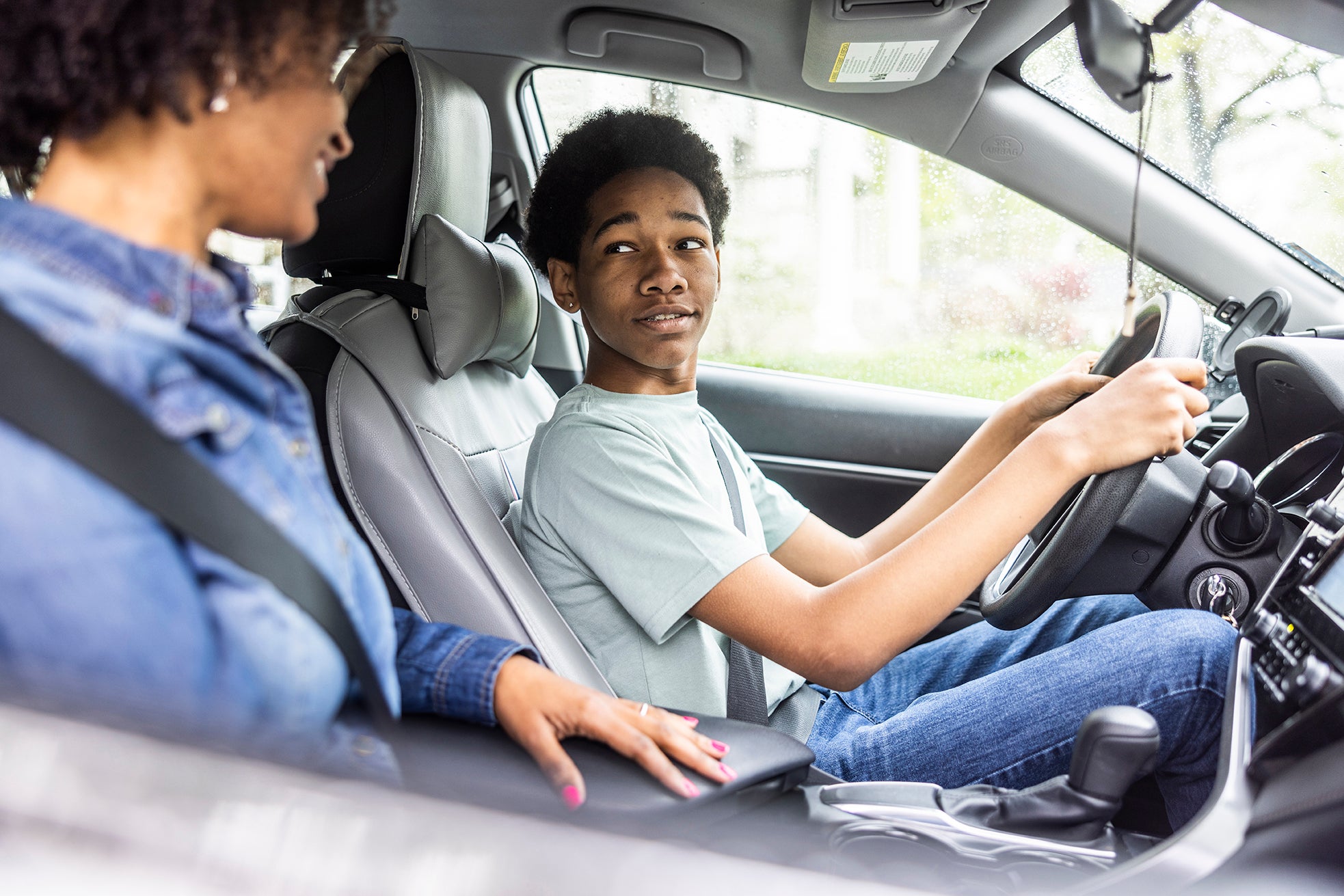
Talk straight about the dangerous realities of driving and help teens understand why the safety rules are so important.
- Texting can take your eyes off the road for 5 seconds. According to the National Highway Traffic Safety Administration, that is like driving the length of an entire football field with your eyes closed at 55mph.
- Motor vehicle collisions are a leading cause of death for teens in the U.S.
- In 2023, 41% of teens (ages 15 -19) that died in car crashes on North Carolina roads were not wearing a seat belt.
Take it easy.
Don’t expect your teen to be a great driver or even comfortable with the idea of driving right away. Start them out in easy settings. An empty parking lot is great for just testing out how it feels to be behind the wheel. Initially let them drive on roads with less traffic and at less busy times of the day. Familiarize them with the mechanics of the car and basic safety rules and tips. Always ride with them during the learning year and exercise patience. If your child has high anxiety, learning to drive is likely to be a trigger. Laura Politte, MD, psychiatry consultant for WakeMed Mental Health & Well-Being, recommends it’s important to let teens start with what they can handle. Consider beginning with short trips in familiar places and stay closer to home before suggesting they drive on longer trips.
“The more hours teens can log in a car with a parent while they have their permit, the more prepared they are likely to be when they are finally on their own,” explains Dr. Politte. “While it may be more anxiety-inducing to log extra hours with a teen driver, you’ll have a better sense of their abilities and readiness to drive on their own."
Practice, practice, practice!

Inexperience is a big reason why teens are involved in so many accidents. That’s why there is a long period of time for driving with a limited learner’s permit. Help your teen get as much practice as possible in many different scenarios. North Carolina uses a graduated driver’s license (GDL) process to help teens learn to drive safely. The process is intended to help teens build skills slowly through supervised practice.
When ready, let them drive regularly.
Once they really seem to know the ropes, let your child drive most of the time when you go places together. That should help them log lots of time behind the wheel and give them plenty of varied experiences.
Layer in complexity.
Once your teen feels comfortable, and you are more confident about his/her basic driving skills, start trying new areas and build up to more complex situations. It’s important for teens to get practice driving in different settings, including highways, rural roads, bridges and steep hills. Think about places that present new scenarios and challenges and talk about them beforehand. Multiple lanes, narrow roads, four-way stops, traffic circles and construction zones are areas that will likely require extra practice. Don’t forget to have them practice driving under different weather conditions and at different times of the day and night.
Check the nighttime driving rules!
- Be sure to confirm what times of night your supervised teen driver is allowed to drive based on his/her level of permit and length of time as a learner.
- Be observant and thoughtful.
- Don’t be a distracted passenger when teenagers are learning to drive. Pay attention to what they are doing and to what the drivers around them are doing. Parents and all supervising drivers have an important role to help them see where the dangers lurk and to mentally put on the brakes when they are out of their comfort zone. Always remain calm.
- Take breaks and deep breaths and talk about anything that is giving them or you anxiety.
Don’t rush the process.
You should never hurry or push teens into the driving lane just because they are turning the legal age for driving. If they are not ready or you have any concerns, slow things down and delay getting a license until sufficient, additional practice strengthens their skills and comfort level on the road.
“Remember, every kid is going to be different – two kids at the same age may not be ready for the same thing when it comes to driving and many other things,” said Dr. Politte. “Your job is to stay focused on developing a safe driver who is ready and willing to be responsible and react appropriately in unpredictable driving situations.” Even if your child has checked all the boxes to be a licensed driver, he/she may not be ready to drive on his/her own.
The Dangers of Distracted Driving
The facts about distracted driving are startling. Take a minute to stop and really think about all the little, distracting things you and the drivers around you are doing while behind the wheel. Now, ask yourself if any of those activities are worth the risk of causing a death or life-threatening injuries. The answer is clear and yet research shows that people’s behaviors frequently contradict what they believe is safe.
“One moment of carelessness can change or end a life,” observes Ashley Hink, MD, MPH, WakeMed Surgical Critical Care & Trauma. “Motor vehicle collisions are a leading cause of death for teens, and many times these are preventable.”
Texts, emails, phone chats, snacks, makeup application, music selections and passenger distractions all take a driver’s attention away from the road and hands off the steering wheel.
“Lives can be shattered in a matter of seconds, but it is completely preventable,” says Dr. Hink. “As a surgeon working in a Level I Trauma Center, we see the consequences of distracted driving, and it is devastating.”
You can save lives and avoid causing serious injuries by simply staying focused and in control of the wheel.
Types of Distraction
VISUAL: Eyes off the road.
MANUAL: Hands off the wheel.
COGNITIVE: Mind off driving
Take a Pledge
Commit to distraction-free driving. You have a choice. Delay distracting activities and focus on driving safely – it can be a life-saving decision! Make it today. Put the phone away and ignore the temptation to deal with anything other than driving when you’re behind the wheel.
Set the Example
Remember, if you don’t take that call or answer that text, that’s one less distracted driver on the road and maybe even two if the person calling you is also driving. Children watch what others do and model their behaviors after the parents and other trusted adults in their lives.
Consider these Tips
- Turn off your ringer; silence your phone altogether.
- Place your phone out of sight.
- Activate autoreplies to let others know you are not responding to calls or texts because you are driving. This sets a great example.
In 2023, 3,275 people were killed in motor vehicle crashes involving distracted drivers.