Siblings Discover a BRCA2 Mutation through WakeMed's PreciselyYou
November 25, 2026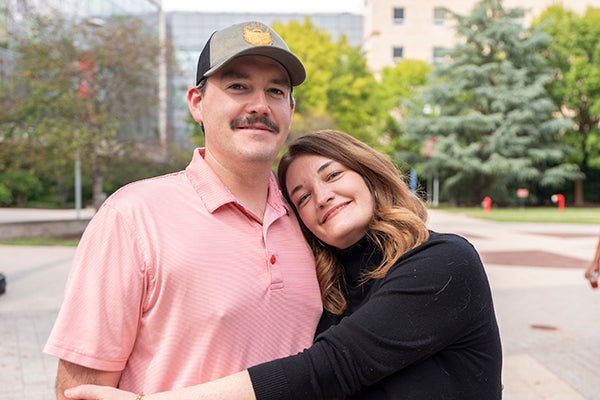
By: WakeMed Health & Hospitals
Categories: Foundation
When Catherine Rahm saw an advertisement for WakeMed's PreciselyYou genetic testing program, she decided to enroll, not expecting life-changing news.
She had no strong family history of hereditary cancer and viewed the no-cost genetic screening opportunity as a chance to learn more about her health while contributing to medical research.
"I was just curious," Catherine shares. "I saw something about PreciselyYou in MyChart, noticed there was no cost, and saw I could help the medical community with research."
By her own admission, Catherine had also struggled with health anxiety throughout her life. When she'd visit her primary care doctors, she'd inquire about genetic testing. She also tried 23 and Me to learn more about her family history and potential genetically passed down health challenges.
"Nothing came from these inquiries, so I figured I was unnecessarily concerned, and I tried to push the fears to the back of my mind."
A Simple Process
Registering for the PreciselyYou program through her WakeMed MyChart was quick and easy.
Catherine signed up during the hustle and bustle of the holiday season, and noting her lack of family history, she put off her blood draw because she didn't believe she was at high risk.
"I didn't have a family history of a particular cancer, so I put it off for a while," Catherine explains.
At the end of January 2025, while visiting her WakeMed Head & Neck Cancer - Ear, Nose & Throat (ENT) physician at the North Hospital Physicians Office Pavillion, she realized she was next door to the outpatient lab. Since the blood draw location was so convenient, she decided it was the perfect time to complete the test.
"The blood draw took about five minutes, and that was it."
About two weeks later, in February, her results arrived.
An Unexpected Discovery
The message accompanying Catherine's results immediately caught her attention.
Her results revealed that she carries a breast cancer gene 2 (BRCA2) genetic mutation, which significantly increases the risk for several types of cancer for both males and females, including breast, ovarian, pancreatic, prostate and certain second primary cancers after a first cancer diagnosis.
"It was a lot of information to take in all at once. I was very shocked."
To calm her nerves, Catherine immediately called the contact number included with her results.
"A nurse named Sandy Parrish called me back within about 30 minutes."
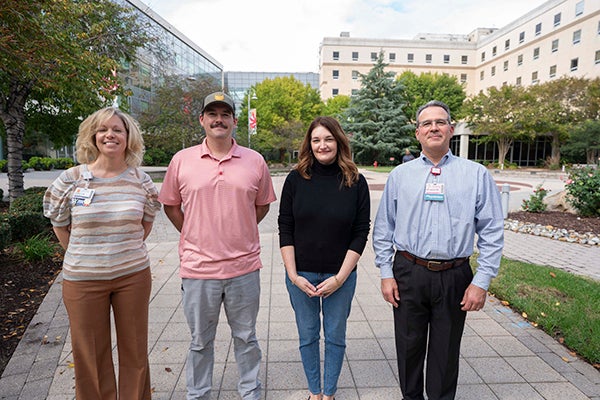
Parrish carefully explained what the result meant, answered all of Catherine's questions and connected her with a WakeMed genetic counselor.
"I even asked if the test could be wrong," Catherine remembers. "She told me it was very unlikely."
The genetic counselor reviewed her personal cancer risks, discussed recommended screenings and helped her understand what steps to take next.
The Results Didn't Stop with Catherine
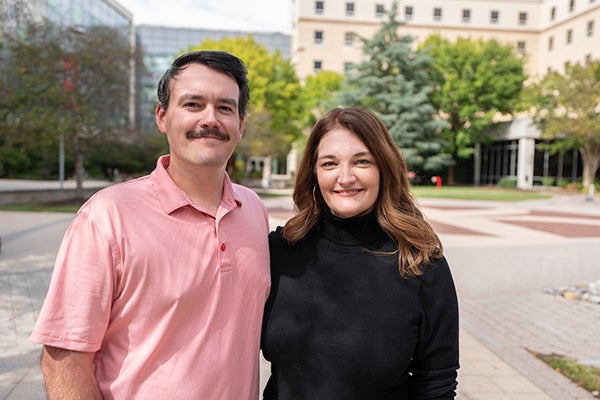
Armed with this newfound information, Catherine encouraged her two brothers to participate in PreciselyYou.
Her 38-year-old brother completed his blood draw at WakeMed Wendell Healthplex. Her 29-year-old brother visited the WakeMed lab at Fuquay-Varina Medical Park.
Both tested positive for the same BRCA2 mutation.
"We were all super shocked," Catherine exclaims. "I thought it would just be me. When both brothers came back positive, we were blown away."
As the oldest sibling, Catherine was grateful she could guide them through the process.
"I did the legwork because I wanted them to get this done, so all they had to do was the blood draw."
The diagnosis affected each brother differently. Her youngest brother was expecting another child.
"He has a daughter and another baby on the way, so naturally he was curious but also anxious," Catherine surmises.
Her other brother, immediately contacted his physicians.
"He went straight to his primary care doctor, was referred to a gastroenterologist to have his pancreas evaluated and also scheduled a dermatology appointment for a skin check."
The Search for the Source
One of Catherine's biggest questions was where the mutation came from.
Working with Megan Mortenson, MS, CGC, of WakeMed Hereditary Cancer Genetic Counseling, she reviewed her family's medical history. Although an uncle had died from pancreatic cancer in his 40s, there was no obvious pattern pointing to a hereditary condition.
Initially, Catherine suspected the mutation may have come from her mother's side since one of her aunts had gone through breast cancer in her 80s and another relative had died of leukemia.
To find out, her mother agreed to testing. Her mother tested negative, so she knew it had to be her father's genes. She urged him to get tested. though he was apprehensive since he'd only ever had an early-stage melanoma during his many years of working in the sun, he decided to move forward with it.
Catherine comments, "To no one's surprise, my dad tested positive — we needed this information to determine next steps."
That discovery meant Catherine and her family had another difficult task through unchartered territory: notifying her dad's side of the family since they could also be at risk.
"We reached out to all of his siblings and their children," Catherine says. "It really affected a lot of people."
She shared the educational materials and recommendations she received from the WakeMed genetic counselor with extended family members. Those conversations weren't easy, particularly because health anxiety runs in the family. Still, Catherine believed having the information could save lives for both males and females.
Per Mortenson, knowledge of the genetic mutation is critical information for all.
"Though the cancer risks for women with a BRCA2 mutation are higher, men still have significant risk with up to 61% of men developing prostate cancer."
Through it all, Catherine was encouraged by the responsiveness of her genetic counselor.
"Megan Mortenson was more than happy to consult with my parents and extended family living outside the Triangle. She has also been instrumental in connecting them with local resources and assisting them in ordering testing."
A New Approach to Preventive Care
For Catherine, personally, learning about her BRCA2 mutation immediately changed her medical care.
She contacted her OB-GYN, Kamm-McKenzie and was referred to breast specialist Ashley Cairns, MD, within WakeMed. She had her first mammogram in October 2025, and the results were clear.
Now she sees her breast surgeon approximately every six months, alternating between mammograms and breast magnetic resonance imaging (MRI) to closely monitor for any changes.
Why Catherine Encourages Others to Participate
Looking back, Catherine says enrolling in PreciselyYou was one of the most important health decisions she's ever made.
What started as curiosity provided information that has transformed her own medical care and alerted numerous family members to an inherited cancer risk they otherwise may never have known.
"I wanted to contribute to medical science research. I never imagined that a blood test would impact my entire family line."
Is Genetic Screening Your Next Step?
For Catherine, the experience represented the power of preventive genetic screening. While receiving unexpected results was overwhelming, having that knowledge allowed patients and their families to make informed decisions, start appropriate screenings and, even prevent cancer before it starts.
What about you? Is genetic screening your next step in family preventive care?
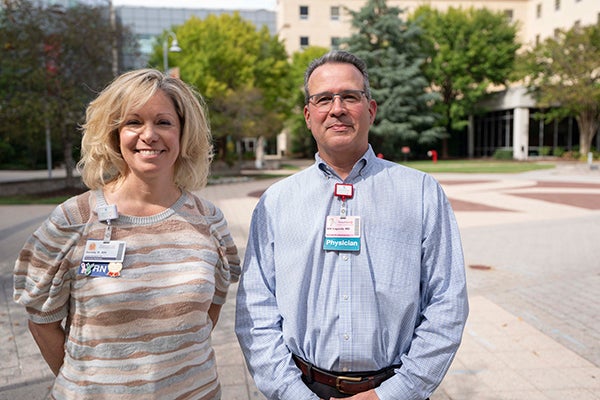
Mortenson offers, "The PreciselyYou program has identified many individuals with hereditary cancer risk who might otherwise have gone undetected. This gives them an important opportunity to proactively manage their cancer risk through enhanced screening and risk-reduction strategies. People with hereditary cancer conditions who are aware of their risk and participate in recommended screening are more likely to have cancers detected at earlier stages and experience better outcomes than those who learn about their condition only after a cancer diagnosis.
"Still, it is important to remember that the PreciselyYou program does not test for all hereditary cancer conditions. Individuals with a strong personal or family history of cancer may benefit from additional genetic testing. Be sure to discuss your personal and family cancer history with your healthcare team, so they can determine whether further genetic evaluation is appropriate."
About PreciselyYou
PreciselyYou is a community health research program brought to you by WakeMed. The program helps you understand how your DNA impacts your health and aims to help improve access to more personalized health care, while supporting new research discoveries for our community.
There is no cost to participate and health insurance is not required. We plan to enroll 100,000 participants/North Carolinians, who are over age 18, in this impactful program.
About Hereditary Cancer Genetic Screening
Not everyone who has a hereditary cancer condition will have cancer in their lifetime. However, we can use this knowledge to increase cancer screenings or initiate them earlier. Additionally, other family members may also have the same hereditary cancer condition and be at risk for cancer. Medications and treatments for cancer have been developed to work better for individuals with certain hereditary cancer conditions. For these reasons, hereditary cancer genetic testing can provide valuable information for you and your family.
Source: