A Screening that Saved Sibling Hearts
December 5, 2025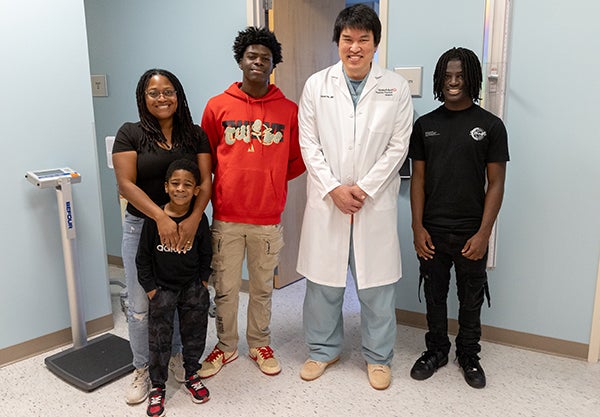
By: WakeMed Children's Hospital
Categories: Children's, Raleigh Campus, Stories
Tags: Pediatric Cardiology, cardio hypertrophic cardiomyopathy
On February 22, 2024, Dekeita Stinson was teeter-tottering about whether or not to take her four sons to the WakeMed SportFit event. They'd signed up, but the distance from Wake Forest to WakeMed Raleigh Campus was over 20 minutes, and her boys didn't want to go. Reluctantly, she took them anyway.
The WakeMed SportFit Heart event is a free electrocardiogram (EKG) screening opportunity for middle and high school athletes.
Her sons included 14-year-old triplets, Christian, Joshua and Jeremiah, and her son, Caleb, who had just turned 11. They were each very excited about playing competitive school sports. Jeremiah wanted to play football. Joshua was training to play tennis. Christian planned to start flag football and Caleb was already playing recreational football and basketball. The completion of SportFit was the check-off they each needed to have their dreams realized.
SportFit: The Gateway Health Clearance for Competitive Sports
Upon arrival to the event, the WakeMed care team quickly took her through a seamless paperwork process and set the boys up for the EKG. The medical assistant brought the EKGs to Jason Ho, MD, FAAP, a WakeMed pediatric cardiologist, who was, along with colleagues, reviewing EKGs and paperwork from student athletes. Dr. Ho immediately took notice of the triplets’ EKG tracings.
Christian and Caleb had normal results. However, to Dekeita's surprise, Joshua and Jeremiah each had concerning EKG results. The EKGs showed a combination of tall R waves suggestive of possible thickening of the heart and T-wave inversion in certain leads which can often indicate a heart defect. Some of these findings can be more prevalent in African Americans as a benign finding
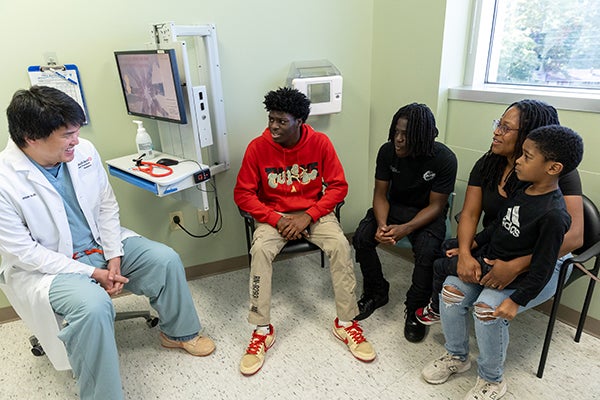
Dr. Ho met with Dekeita and her sons to discuss the significance of the findings. He informed her that they would immediately need echocardiograms.
Dekeita shares, "It was all just overwhelming and happened so quickly. Yet, Dr. Ho was amazing at explaining the situation. He said the findings were not necessarily pointing to something serious. But, they still needed this additional testing for certainty."
Dekeita consented to the echocardiograms, but she was also curious how this could be the case.
"My mind was racing as I thought about my boys. I had always made sure they had their regular checkups, ate well and remained hydrated. Plus, they never showed any signs of heart-related symptoms."
Upon returning from the echocardiogram, Christian was cleared. Joshua and Jeremiah had a different outcome. They were told not to play any sports while they awaited a formal evaluation in clinic.
Additional testing, including an echocardiogram and cardiac magnetic resonance imaging (MRI) confirmed the diagnosis of hypertrophic cardiomyopathy.
"The outcome for these brothers offers a good example of why SportFit is important," Dr. Ho contends. "It is a powerful, efficient and painless tool to catch potentially life-threatening conditions impacting the hearts of young athletes."
Locked Out of the Game by Hypertrophic Cardiomyopathy
Hypertrophic cardiomyopathy (HCM) is a condition caused by a mutation in certain structural proteins in the heart, resulting in abnormal thickening of the heart muscle. This can hinder its ability to pump blood effectively. While many individuals with HCM may not face serious problems, some can experience significant symptoms that disrupt their daily activities. Common issues include shortness of breath and chest pain during or after physical exertion, along with fainting spells, especially during exercise. Others might feel rapid or pounding heartbeats, known as palpitations. In more severe cases, HCM can affect the heart's electrical system, potentially leading to dangerous arrhythmias or even sudden cardiac arrest and death. In fact, HCM is by far the number one cause of sudden cardiac death in young athletes in the United States. Recognizing these risks is essential for managing the condition and ensuring the well-being of those affected.
Dekeita was shocked to learn of the condition and that it was genetic.
She explains, "We later did genetic testing, and it was inconclusive, like a variant that hasn't been studied or hasn't been around for long."
Dr. Ho adds, "Genetic testing results such as this occur in about 30 percent of HCM individuals."
A Touchdown Despite a Loss
Even still, Dekeita is grateful that the conditions were caught early, as her sons were entering puberty, when symptoms are statistically more likely to manifest, due to the progressive nature of the condition.
She offers, "They never had any physical symptoms of shortness of breath, dizziness or fainting. Since we now know not to let them play high exertion sports, we have avoided any potentially life-threatening emergencies."
Another positive was that neither boy needed surgery or medication management. Dr. Ho explained that the treatment approach focused on eliminating high-intensity physical activities. This meant they could not play competitive football, any basketball, track and field, singles tennis or free weight strength training. They could do less stressful cardiac activities, such as machine-based weightlifting, recreational football, doubles tennis and jogging.
"The long-range hopeful outcome for Joshua and Jeremiah," Dr. Ho offers, "is to live full lives while under the surveillance and guidance of a cardiologist. Early detection, lifestyle modification, and regular check-ups are the key to having a normal life expectancy with this condition."
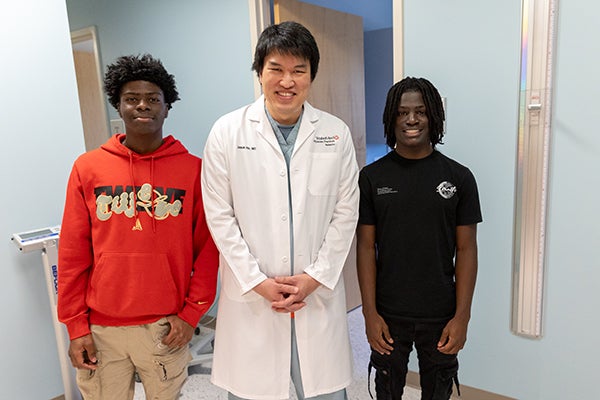
Dekeita says of her sons' reactions, "Joshua was accepting of the diagnosis, but Jeremiah continues to struggle with it. He longs to play high school football and basketball. We play football very mildly as family fun, with him as the quarterback, to appease him and prevent any injury. The worst-case scenario would be if he had a cardiac event because it could lead to sudden death or the need for life support or a heart transplant."
The boys continue to be monitored twice yearly with EKGs as well as annual echocardiograms. They will repeat MRI studies every few years.
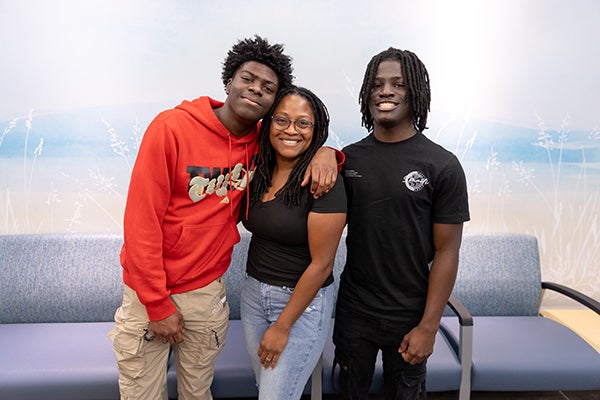
Because of the conditions in two of her boys, all four boys are scheduled for pediatric cardiology visits. To date, Christian remains free of any heart issues. Caleb's benign issue has not progressed to anything of a concerning nature.
Dekeita says, "I'm thankful for SportFit. I was a little scared, based on what Dr. Ho shared with me, but it was because of that program I learned about my sons' conditions and met this wonderful doctor who carefully explained everything to me."
Since receiving their diagnoses, Dr. Ho surprised the family with a wonderful gift to help soften the blow of their sports restrictions. He submitted both Joshua and Jeremiah as candidates for the Make-a-Wish Foundation.
Dr. Ho shares, "I recommended Jeremiah and Joshua to Make-a-Wish due to their condition. Make-a-Wish is for children who have conditions that are terminal or life-altering. The Make-a-Wish experiences give them a chance to feel like normal kids. It is a silver lining, providing them something to look forward to with memories for a lifetime."
Jeremiah had his wish granted. He met wide receiver Justin Jefferson of the Minnesota Vikings. Joshua will receive his wish in 2026.

About WakeMed Pediatric Cardiology
WakeMed Children's – Pediatric Cardiology is a specialty practice focused on providing comprehensive care and management of cardiac conditions in children, from pre-natal diagnosis through early adulthood. Whether it’s a congenital or acquired heart condition, our highly skilled providers are committed to offering individualized care that is patient and family-centered with the goal of helping children maintain a healthy and active lifestyle.