From the Baseball Field to the Operating Room: Cannon’s Pectus Excavatum Story
October 12, 2026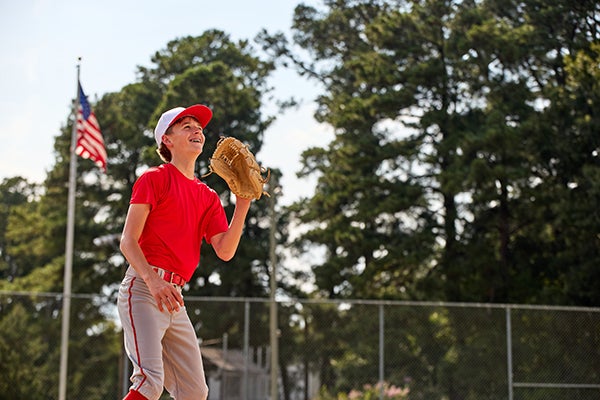
By: WakeMed Health & Hospitals
Categories: Children's, Chest Wall, Stories, Foundation
Tags: Chest Wall, Pectus excavatum
At 12 years old, Cannon is a multi-sport athlete with a schedule full of baseball practices, basketball games and constant movement in between. Most days, his mom, Michelle, cheers for him in his main position — right field (like his favorite player Ronald Acuna, Jr.). He also plays center field on the baseball diamond and runs the floor as a point guard on the basketball court.
For him, sports aren’t just an activity — they’re his rhythm of life.
Michelle drives it home: “He’s constantly doing something sports related. Baseball takes up the majority of the year, but he’s often shooting hoops and dribbling too.”
Baseball, though, has Cannon's heart. It’s also the focal point of his future dreams.
“Probably baseball,” Cannon says when asked which sport he prefers. When it comes to long-term goals, both he and his mom have their sights set on his future path.
"I want to play at the college level at NC State," Cannon says as Michelle nods in agreement.
Yet, behind the energy, competition and drive was a complication — Cannon had an underlying chest wall condition called pectus excavatum that would eventually require surgery.
Early Signs that Something was Different
Cannon’s family had known about his sunken chest shape since he was a baby, but it didn’t initially interfere with his life. He started baseball around age four and basketball by age seven.
It wasn’t until later that subtle symptoms began to stand out.
Michelle recalls her early concerns. “When he was around seven or eight, he had a few days of chest pain. We took him to the pediatrician, and that’s when his chest started being looked at more closely.”
Over time, what began as occasional discomfort slowly became noticeable during physical activity. Cannon started to experience shortness of breath and fatigue that didn’t match what his peers were going through.
“Before surgery, it was hard to breathe sometimes,” Cannon says. “I lost breath really quickly.”
Michelle noticed it mostly after games.
“He was always a lot more tired than the other kids, especially in basketball. He needed breaks more often.”
Understanding the Diagnosis
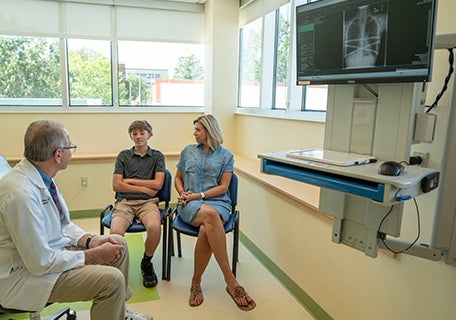
After initial evaluations and a chest X-ray, Cannon’s care was referred to the WakeMed Chest Wall Deformity Center, and over time, imaging revealed more detail about what was happening inside his chest.
By the fall before surgery, a computed tomography (CT) scan performed through WakeMed Imaging Services showed the condition had progressed significantly. Duncan Phillips, MD, FACS, FAAP, surgeon-in-chief of WakeMed Children's Hospital and the director of Pediatric Surgery for the physician practices, received the referral for the case.
"I was relieved when I learned Dr. Phillips would be the surgeon," Michelle shares. "He'd performed an unrelated surgery on my other son when he was a baby, and Dr. Phillips was wonderful. He had a compassionate and educational approach. I was glad Cannon would be in his care."
In reviewing Cannon's scans, Dr. Phillips could see the chest wall pressing inward against the heart during their appointment at Pediatric Surgery - Raleigh Medical Park. Cannon's heart was compressed and pushed to his left side.
Dr. Phillips explains, "Our understanding of pectus excavatum (sunken chest) has evolved significantly over the past several years. Rather than just a cosmetic problem, we’ve shown that compression of the heart significantly reduces cardiac output at the time of vigorous exercise, causing shortness of breath, progressively worsening fatigue and chest pain. Most of our patients are not sedentary. They are young, energetic, athletic teenagers who want to maintain their usual levels of activity."
Michelle says, “There was limited space in between where the bone had gone inward. It was getting pretty severe.”
She was right. At that point, the condition was no longer something to monitor. The structural impact on his heart and lungs, combined with increasing symptoms, made surgery the necessary next step.
Still, timing mattered. Dr. Phillips initially hoped to wait until Cannon was at least 14 to give his body more time to grow. Over time, his breathing became significantly affected, so the decision to move up the timeline became clear.
Michelle remembers one moment that made it real. “He ran down the street to get our dog who'd escaped and came back so out of breath he was crying. He told me, ‘I can’t breathe.’ That’s when I knew it was time.”
Preparing for Surgery
Cannon’s surgery took place on March 12, 2026, at WakeMed Raleigh Campus. Dr. Phillips, who specializes in pectus excavatum repair, expertly led the team using a minimally-invasive approach.
The minimally-invasive "Nuss" technique involves temporary placement of one or more titanium bars in the chest to push the sternal bone forward. These bars are guided between the ribs, into the chest, with use of a thoracoscope (small diameter telescope), inserted into the chest during the surgical procedure through small incisions. Bars are typically removed after two to three years.
Dr. Phillips expounds, "Our approach to pectus excavatum is radically different than it was in the 1970s, 1980s and early 1990s. Previous surgical approaches were aggressive, with cutting of the sternal bone and removal of abnormal cartilages. Since the late 1990s, we have modified the operation rather dramatically, with minimally invasive techniques to remodel the chest. Through small incisions, we can place temporary titanium bars to allow the ribcage to be reconfigured and essentially “bent” into a more normal configuration. I tell teenagers it is analogous to braces on the teeth: the orthodontist doesn’t take a hammer and break all your teeth out — rather, the orthodontist places braces to move/shift your teeth into a different alignment. Modern pectus excavatum surgery is quite similar."
The morning started early, with standard pre-surgery preparation: taking a shower, following instructions and drinking a Gatorade before arriving at the hospital.
Like many pediatric patients, the hardest part wasn’t the surgery — it was the intravenous (IV) needle.
“I was really nervous at first,” Cannon recalls. “Once they told me how it would go, I wasn’t as scared.”
A WakeMed child life specialist played a key role in easing his nerves, providing stress-relief tools, explaining what to expect and even showing Cannon the IV equipment, so he could understand it visually.
Michelle notes, “She was fantastic. That really helped relieve some of his nerves.”
Within about two hours, the surgery was complete. Michelle received updates throughout the surgery, including messages confirming it had started, progressed well and finished successfully.
For Michelle, that communication made a huge difference. “It was reassuring. I wasn’t just sitting there wondering and worrying.”
Waking Up to a Different Body
When Cannon woke up, his chest looked different immediately.
“I saw my chest, and it was pretty crazy,” Cannon smiles. “It was like a normal chest right away.”
Michelle noticed the change just as quickly.
“He had a completely normal chest. No more indentation.”
Despite feeling groggy following surgery, Cannon kept checking and rechecking what had changed, repeatedly looking down, processing the fact that the surgery had already worked.
“I kept saying, ‘They did it already?’”
Recovery: Fast, but Carefully Managed
Cannon stayed in the hospital for one night. Pain management was a major focus, supported by a combination of medication and techniques, including nerve-freezing cryotherapy designed to reduce post-surgical discomfort.
The first couple of days were the hardest, but recovery moved quickly. The same day as surgery, Cannon was getting up with help. The next day, he was walking the halls with the support of a physical therapist.
Breathing exercises with an incentive spirometer were part of daily recovery, and the results were measurable.
“I started at 200 on the breathing machine,” Cannon exclaims. “Then after a week or two, I was getting to like 500 or 600.”
Michelle saw it as one of the clearest signs of improvement.
“His lungs had been compressed all his life. Now he was learning how to fully expand them.”
At home, recovery came with restrictions — no twisting, no side sleeping and eliminating arm support for two weeks. The family received a hospital bed to help him stay comfortable in a reclined position.
Despite limitations, Cannon progressed quickly.
“By Monday, he was off the strong pain medicine,” Michelle shares. “Within a week, he was completely turning a corner.”
Returning to Normal Life — and Sports
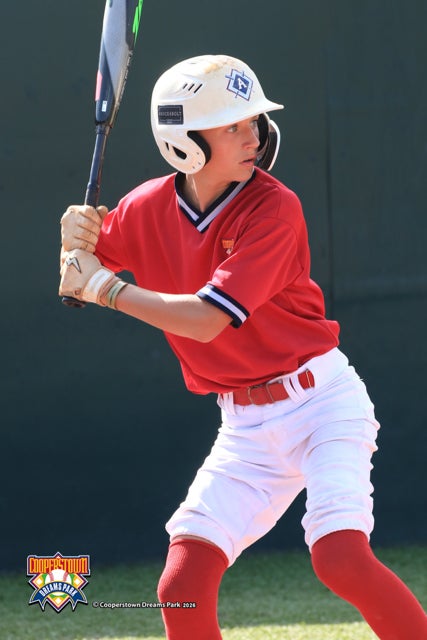
Cannon missed just one day of school — thanks to track out timing, and his return to daily life was smoother than expected. Within two weeks, he was doing light activity. By four weeks, he had returned to school and sports.
“At first I wasn’t really batting or doing full stuff on the field,” Cannon explains, “but then I got back into it like nothing had happened.”
Michelle agrees, “We couldn’t believe how fast he bounced back.”
One early concern — sliding in baseball — turned out to be no issue at all.
“I was nervous about sliding,” Cannon remembers. “I barely even felt it when I did.”
The Difference: Breath, Energy and Confidence
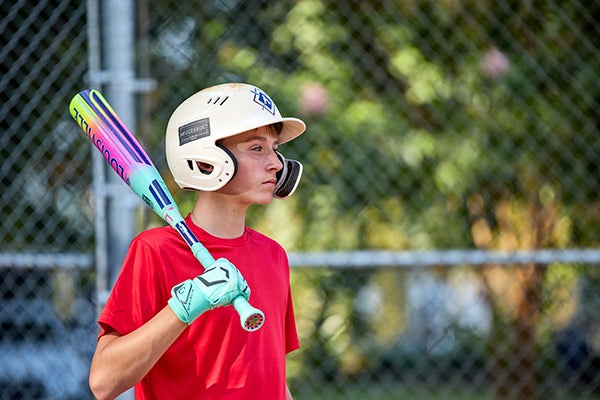
The most noticeable change wasn’t his physical appearance — it was his energy levels. Before surgery, Cannon would often come home from games completely drained. That pattern has now shifted dramatically.
Michelle lights up, “After games now, he’s going to the pool or playing wiffle ball. He just keeps going.”
Cannon notices it too. “I can breathe way better. Everything feels better.”
Cannon's posture has also changed, with his shoulders sitting more naturally instead of being pulled inward by a sunken chest structure.
A Look Ahead
Cannon still has a recovery process ahead, including periodic check-ins and eventual bar removal in two to three years. Some mild discomfort remains at times, especially as his body continues adjusting to the implanted support structure designed to guide chest growth.
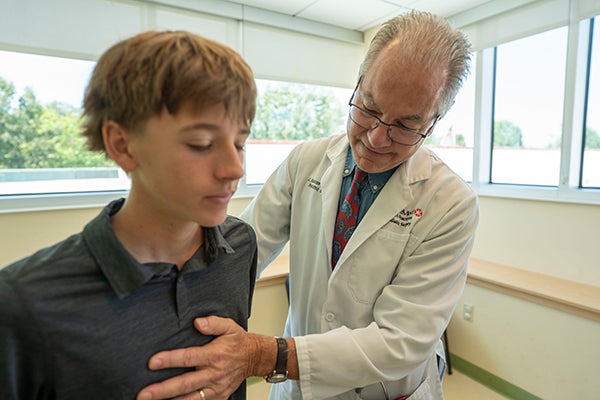
But the overall trajectory is great: more energy, easier breathing and a return to the sports he loves — without the physical limitations.
For a 12-year-old athlete with big goals, that's what truly matters, and for his mom, the change is just as striking.
“I didn’t realize how much of his fatigue was from this,” Michelle responds. “Now I see it clearly.”
Dr. Phillips reinforces her observation: "The average improvement in cardiac output following pectus excavatum surgery is roughly 25%. For energetic/athletic kids, that’s quite significant."
Cannon's Life Today: Back in Motion
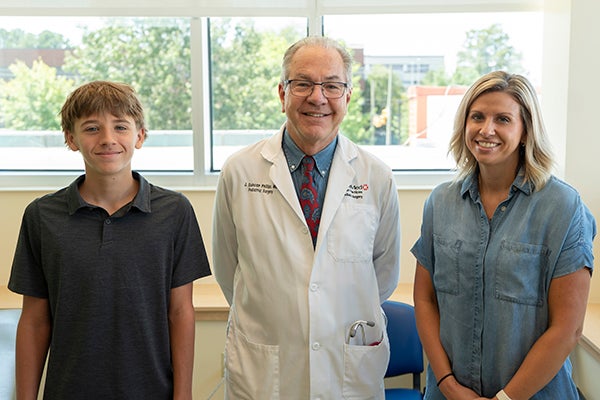
From right field to the recovery room and back again, he’s still doing what he’s always done: running, playing and chasing his dreams. Thanks to his WakeMed care team, he can breathe easier while doing it.
About WakeMed Chest Wall Deformity Center
WakeMed’s Chest Wall Deformity Center brings decades of expertise helping both children and adults overcome the challenges associated with these common congenital and acquired problems. Whether you or your child has been diagnosed with pectus excavatum, pectus carinatum, Jeune’s syndrome or a rare chest wall deformity, our expert surgical and support teams can guide you through your treatment journey — every step of the way.
About WakeMed Child Life
Child Life Specialists help children and families cope with the stress and anxiety that often accompany a hospital experience. They are trained in teaching children and adolescents about medical procedures in a developmentally appropriate manner to support your child's specific needs and facilitate effective coping methods. A family-centered resource, they cater to patients 0-17 and their families.
About WakeMed Children's Hospital
At WakeMed, we are always committed to the health and wellbeing of our patients. We are taking additional measures to keep you safe. Please read our current visitor information
WakeMed Children’s Hospital is proud to be the only pediatric inpatient care provider in Wake County, caring for thousands of babies and children each year and always providing the highest level of care and caring to our youngest patients.