Just as you wouldn’t neglect vehicle maintenance, it’s important to keep your body running at peak levels too.
During Men’s Health Month, I want to stress the importance of an annual wellness checkup for men. While many men skip these visits, they serve an important role in helping men lead a healthy life.
Don’t Ignore the Check Engine Light
Throughout childhood, it is recommended that boys and girls receive an annual well child check. It makes sense to continue the annual checkup once per year at the start of adulthood and moving forward. This can be challenging to do with college, career, family and other obligations as well as the transition from childhood to adulthood, but everyone, including men, should make it a priority.
The Body has Wear Items Too
The two big reasons men should schedule an annual checkup is to, first, catch disease early to improve outcomes. This happens primarily through preventative screening tests and routine blood work. It's also a solid way to check in regarding other problems and get some answers or next steps for referral while in the appointment.
Many times, I've asked patients if they have any other concerns they'd like to discuss before we end the appointment, and they'll mention a racing heart that may turn into a huge discovery, such as atrial fibrillation (AFib). These appointments present opportunities for important discoveries in preventative care.
That Detour is Not a Good Idea
Getting an annual checkup does take time, but the time is minimal, averaging only 30 minutes, so it is achievable during a lunch break. Family and work obligations will get neglected if illness goes unchecked, so skirting around the checkup isn’t worth it.
Fear: One reason men may struggle with visiting a doctor is fear of discovering a looming health issue. While it is possible that these appointments could uncover a health condition, catching it early is ideal. For example, I find in my practice that high cholesterol is a typical problem. The screening test for cholesterol can bring this to light. I can then help patients make lifestyle changes that could prevent going on medication, which can be dauting for some people, especially men.
What's important is that with an annual checkup, conditions could come to light that my patients didn't expect, but early intervention in the 20s and 30s can prevent complex issues in the 40s, 50s and 60s.
Blood work: Some men are adverse to needles, and while we typically recommend blood work during the visit, we will not force a patient to obtain labs against his will. In medicine, I urge patients to consider the risk versus the benefit. So, if a patient is unwilling to obtain blood work, it can be problematic to offer comprehensive care.
Rectal and Testicular Exams: Some men worry that the checkup will involve a rectal or testicular exam. I do not perform either of these unless the patient shares symptoms and then consents to a physical exam. I encourage my patients to perform self-checks for any new lumps or bumps, particularly in the testicular region.
Money is another hurdle for men. Yet, yearly physicals are covered by insurance. The visit, the labs, any screening tests and vaccinations should all be covered through most insurance plans. If a patient brings up a medical concern, that may be billed as a separate issue during the discussion, such as if the patient shares of chronic chest pain or shortness of breath that requires immediate additional investigation.
It’s Not Much Different than a 5,000 Mile Vehicle Checkup
Vehicle maintenance doesn’t make a car run better, but it keeps it running as well as it is. Similarly, getting an annual wellness checkup won’t turn back the hands of time, but it could prevent a man’s health from declining and provide him with steps to improve his lifestyle or get back on the road to recovery.
My team checks routine vitals, such as blood pressure, height, temperature and weight. I discuss family history with my patients. We review medications and go over any chronic disease. I examine the ears, nose, mouth, neck, heart, lungs and abdomen. These are the basic components of the physical part of the checkup.
I feel a common misconception of physicals is patients believing it's all encompassing and that the emphasis is a head to toe exam. They may think every problem will be handled with a physical, when in reality it's a preventative care visit. The goal is to tune up the basic aspects of care and determine next steps, should additional care be warranted.
Fluids In and Fluids Out
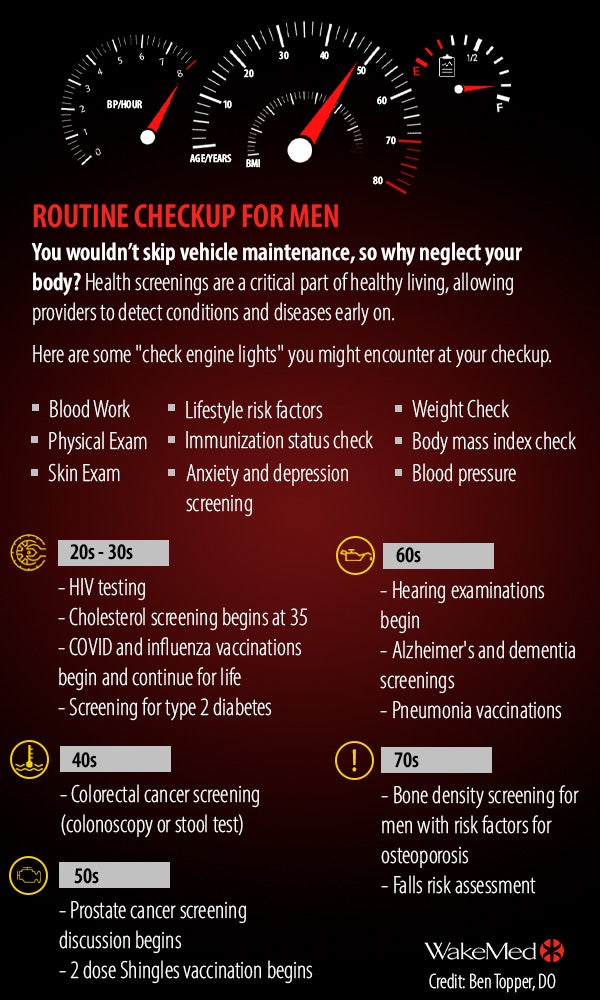
As mentioned, if the patient is willing, I also order routine blood work to review red and white blood cells, kidney function, electrolytes, liver function and cholesterol levels. We might screen for diabetes if there are risk factors. Also, once a man gets into his 50s, I’ll start talking about the pros and cons of prostate cancer screening using the prostate specific antigen (PSA) blood test. It can be preferable to the physical digital rectal exam, since the blood test is far less invasive.
Another major purpose of these preventative visits is to administer vaccines. Pneumonia vaccines, flu vaccines, shingles and, now, COVID-19 vaccines are a few that men should expect to receive over their lifetime. Pneumonia, flu and COVID vaccines may not prevent patients from catching these viruses, but they can lessen symptoms and prevent spread of dangerous symptoms. The shingles vaccine prevents shingles, and I urge men to get it starting around age 50 because shingles is painful and could have lifelong impact.
A Lifetime Maintenance Schedule
This is a Chance to Talk Shop
As I mentioned earlier, lifestyle plays a big role in overall health. Do they smoke? Do they drink alcohol? How is their diet? Do they get much physical activity? Do they use some form of birth control or protection during intimacy? How do they feel about their well-being?
We screen for STIs if a man is in the high-risk category. This also presents an opportunity to discuss options for protection and support in preventing complications from certain STIs.
Responses to these questions also help in educating on lifestyle. Referrals to other specialized providers if a man needs help beyond our scope of practice can prove beneficial.
Nutrition Services could assist with dietary and alcohol consumption considerations. We could also provide referrals to other services, such as Bariatric Surgery & Medical Weight Loss and even Safeway to Fitness, should he need weight management medical intervention or simply more community and motivation around exercise.
I tell patients while these questions may seem overly personal, they help me discover any health issues or the potential for developing health challenges down the line. For example, if a patient in his 30s or 40s shares that he's a smoker, I will refer him to our Quit With WakeMed team to support smoking cessation and prevent chronic conditions, such as shortness of breath or chronic cough in his 50s and 60s.
One of the big issues men struggle with is mental health. Men often hold emotions inside and do not express them, so fostering a welcoming environment in my practice in which men feel comfortable to speak openly about their health and their lives can lead to avenues of support.
Primary Care is a Specialized Maintenance, Repair and & Tune Up Service
I encourage every man to have a primary care provider and visit at least annually for the checkup. For whatever the ailment, we can help or refer a patient to a specialist.
One consideration patients have for me is the difference in a doctor of osteopathic (DO) medical and a medical doctor (MD). DOs have the same education as MDs. We take the same tests and board exams. DOs are trained to be holistic, which involves incorporating more lifestyle education, but we are not homeopathic. Ultimately, I aim to consider what changes in lifestyle could help as opposed to immediately starting patients on medication, unless essential. DOs also learn osteopathic manipulative techniques (OMT), which involves using our hands to treat certain conditions, such as musculoskeletal issues or infections. I do not do much of this in my practice.
My goal as a primary care physician is to help patients live their best lives from a medical standpoint. I want my patients to be able to enjoy what they want to enjoy, with me as a confidential resource.
About Benjamin Topper, DO
 Dr. Ben Topper is a doctor of osteopathic medicine with clinical interests in general family medicine and mental health. He earned his undergraduate degree through Walsh University in North Canton, OH. He went on to medical school at Ohio University Heritage College of Osteopathic Medicine in Athens, OH. He finished residency at Mercy Health – St. Rita’s Medical Center in Lima, OH.
Dr. Topper's approach to patient care is rooted in the belief that a trusting and open relationship is fundamental to effective healthcare. By fostering a friendly and safe environment, Dr. Topper encourages patients to express their concerns without hesitation or fear of judgment. This welcoming atmosphere helps to dismantle barriers that often inhibit communication, allowing for a more comprehensive understanding of the patient’s needs and preferences. In return, patients are greeted with honesty, compassion and respect, as Dr. Topper prioritizes transparency in all interactions. This reciprocal dynamic not only enhances patient satisfaction but also leads to improved health outcomes, as individuals feel valued and understood in their journey towards wellness. Dr. Topper’s commitment to cultivating a supportive space empowers patients to take an active role in their healthcare, fostering a collaborative partnership.
When not at work, Dr. Topper enjoys hiking, running, playing or watching sports (specifically the Michigan Wolverines and New England Patriots) and spending time with friends and family.