How Safe Sleep Has Changed: What You Need To Know
December 28, 2025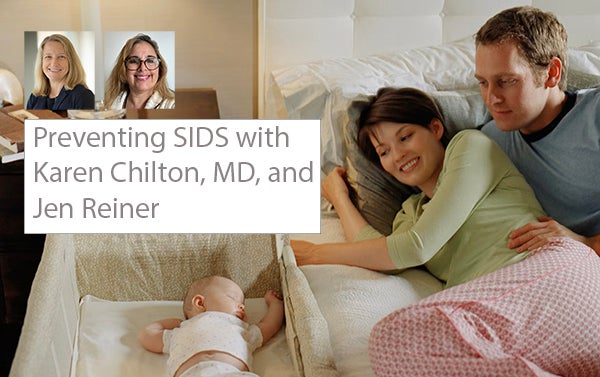
If you’re a parent or grandparent, you may think you’re already familiar with an infant’s safe sleep environment. Recommendations have changed in recent years, so now may be a good time for a refresher. We connected with Karen Chilton, MD, the Chief Medical Officer of WakeMed Children’s and the Associate Chief Quality Officer for WakeMed, as well as a practicing Pediatric Hospitalist to devise a list of tips. We also consulted with Jen Reiner, BSN, RN, IBCLC, CPD, our WakeMed Birth & Family education specialist, to learn more about safe sleep.
Sleep Safety Recommendations Explained
- Use a firm sleep surface, to include a safety-approved crib, bassinet, portable crib or play pen covered by a fitted sheet. If the baby falls asleep in a car seat, stroller, swing, infant carrier or sling, move your baby to a firm sleep surface as soon as possible.
- Do not use pillows, blankets, stuffed toys, crib bumpers, or any other soft, loose objects in the baby’s sleep area.
- If an additional layer is needed, a wearable blanket or sleep sack is recommended.
Reiner explains, "New parents may be unaware of consequences of suffocation. Loose blankets can be jiggled loose and then pulled over an infant's head much easier than most people realize."
- The Consumer Product Safety Commission (CPSC) recommends against the use of sleep positioners of any kind.
- Babies should sleep alone on their backs. If you or your baby becomes drowsy while your baby is nursing, receiving skin-to-skin or being held, you should place the baby on his/her back on an approved, firm sleep surface before you fall asleep. Some babies will roll onto their stomachs. You should always place your baby to sleep on the back. If your baby is comfortable rolling both ways, you don’t have to return your baby to the back.
Easy to Remember ABC’s of Infant Safe Sleep
A: All by myself
I should sleep alone because sleeping with anyone else is not safe.
B: Back to sleep
I should sleep on my back because on my side or stomach is not safe.
C: In my crib
I should sleep on a firm mattress with no pillows, loose blankets or stuffed animals because they are not safe.
S: Safe transfer
Keep me safe by always putting me back in the crib.
Did You Know?
#1 – Healthier women means healthier babies.
- Be sure to receive regular healthcare checkups. during pregnancy, and avoid smoking, alcohol and recreational drugs.
#2 – Breastfeeding may lower the risk for SIDS.
- Breastfed babies have a lower risk of Sudden Infant Death Syndrome (SIDS).
#3 – Vaccinating your child offers protection.
- Infant vaccines protect against serious diseases; these diseases increase the risk of SIDS.
#4 – Pacifiers help reduce the risk of SIDS.
- Offer your baby a pacifier at bedtime and nap time. For babies who are bottle-fed, pacifiers can be offered soon after birth. The recommendation differs for breastfed babies.
Reiner offers, "The recommendation is to introduce a pacifier to a breastfed baby at about three to four weeks of life in order to ensure that breastfeeding technique and milk supply have been established."
SID Declines in North Carolina
Dr. Chilton says, "While the infant mortality rate in North Carolina has declined in recent years, we still have a long way to go. We are committed to providing the most effective patient & family education possible to help reach that goal."
How You Can Learn More
In addition to having safe practices modeled in the hospital, safe sleep materials are distributed in the WakeMed birthing and parent education classes, as well as during tours of our birthing areas. Educational information is also available in patient rooms as appropriate and will be provided to all families who are discharged with an infant less than one year of age.
Reiner concludes, "While a sudden infant death event cannot be predicted, there are measures that all parents can take to reduce the risk by performing safe sleep-promoting behaviors every time. By placing an infant on their back to sleep on a firm, flat surface, parents can protect the infant airway and ensure effective breathing and sleep patterns. By removing unwanted and unnecessary items from the infant sleep space, parents can reduce opportunities for suffocation and asphyxiation. Research has guided these measures and they have been proven to be effective by reduced occurrences of SIDS with implementation."
About Karen Chilton, MD
Karen Chilton, MD is the Chief Medical Officer of WakeMed Children’s and the Associate Chief Quality Officer for WakeMed, as well as a practicing Pediatric Hospitalist. She attended medical school at the Pennsylvania State University School of Medicine at Hershey Medical Center and completed a residency in pediatrics at the University of North Carolina.
She joined WakeMed Health and Hospitals in 2004 as a Pediatric Hospitalist. For five years, she served as the Medical Director for WakeMed Physician Practices Pediatric Critical Care and Hospital Medicine during a period of significant growth. She subsequently became the Associate Quality Officer for WakeMed Children’s with the goal of improving healthcare quality and safety across the WakeMed continuum of care for the children of Wake County.
As the current Associate Chief Quality Officer of WakeMed Health and Hospitals, she oversees the health system’s departments of quality, patient safety, accreditation, risk management and infection prevention.
Dr. Chilton lives in Raleigh with her husband and two daughters. She loves to travel with her family, and she is an avid runner and reader.
Source:
How to Keep Your Sleeping Baby Safe: AAP Policy Explained – HealthyChildren.org