Sun's Out, Safety's In: Your Guide to a Healthy and Injury-Free Summer
May 12, 2025
Medically Reviewed by Katherine Quinn, CPNP
Summer's here and that means sunshine and outdoor adventures! Along with the fun comes potential safety hazards. From heat exhaustion and dehydration to injuries from outdoor play, poisonous plants and snake bites, it's important to be aware of the risks. To help you stay safe and enjoy a worry-free summer, we spoke with WakeMed Pediatric Primary Care provider Katherine Quinn, CPNP, about tips to keep the good times rolling and injuries at bay.
Sun Safety
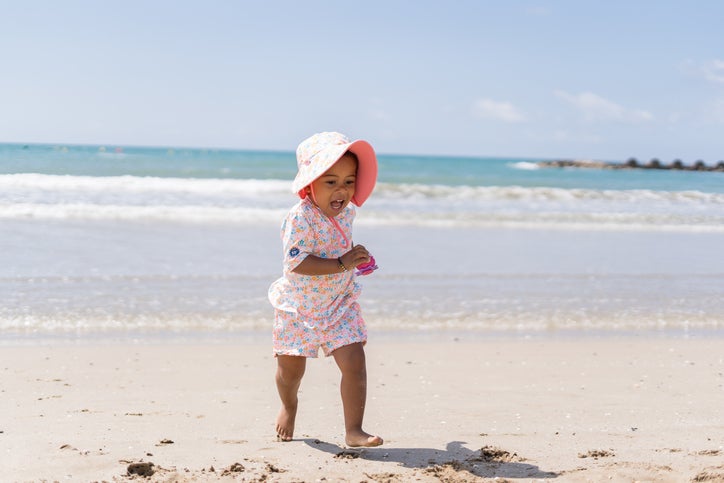
All people, including babies, need sunscreen. Babies under six months should be kept out of direct sunlight, using more shade, including stroller canopies and umbrellas.
- They should be dressed in hats and breathable, long-sleeved clothing.
- If a baby's face, hands and feet are still exposed, caretakers should apply broad spectrum, natural sunscreen of at least 15 SPF that contains zinc or titanium oxide as opposed to chemical based sunscreen.
Besides sunscreen, all people, including people of color, should take additional precautions to protect their skin.
- Wear brimmed hats.
- Stay out of the sun between peak sun hours of 10 am and 4 pm.
- Wear long, light, breathable clothing to protect the barrier of the skin.
- Sunglasses are important to protect the eyes from rays.
- Sunscreens should be applied about 15 to 30 minutes prior to going outside, reapplied every two hours and after swimming as well.
Hydration Safety

Hydration is important. During the summer, it's even more crucial, because dehydration is easily possible when doing strenuous activities in higher heat.
- Starting at six months, babies should be introduced to drinking water of about four to eight ounces per day. This is in addition to their normal breast milk or formula intake.
- By ages one- to three-years old, toddlers need about four cups a day, increasing as they get older.
- School-aged children spend a lot of time talking, exercising, sweating and participating in vigorous activities. They need about three to eight ounces every 20 minutes.
- Teenagers need closer to 30 to 50 ounces per hour if they're exercising and doing sweaty activities.
Remember, water does not have to be boring.
- Water can be infused with fruit.
- It can be turned into popsicles.
- Also, foods high in water content, including watermelon, cantaloupe, zucchini, cucumber and more, hit those watermarks.
If someone is showing signs of dehydration, bring the person inside and add electrolytes to his or her water.
These are signs of dehydration:
- Intense thirst
- Dark yellow and strong-smelling urine
- Reduced frequency of urination
- Dizziness or lightheadedness
- Fatigue
- Dry mouth, lips and tongue
- Sunken eyes
If someone is spending over an hour on a strenuous, sweaty activity, always add electrolyte packets or an electrolyte-rich beverage. For normal play days this is not needed because it's replaced by regular water, fluid intake and hydrating food.
Playground Safety

Children should visit park playgrounds for exercise and socialization, but parents must do their due diligence to ensure the play clothes, spaces and equipment are safe.
- Children should be dressed appropriately in clothes that will not snag or get caught on equipment. They should also wear closed toed shoes to avoid rocks and bolts in shoes
- Play structures should not be built on top of hard surfaces, including concrete and asphalt, because children will, inevitably, fall and a soft impact will help prevent injury. Safer surfaces include these:
- Mulch
- Wood chips
- Rubber mats
- Sand
- Thick grass
- When playing, children need to take care while enjoying equipment, especially slides.
- They should go down slides feet first.
- If slides are in direct sunlight, whether metal or plastic, test the surface with the back of the hand to ensure it isn't too hot to enjoy. Children can be burned while going down a hot slide.
- Parents should also refrain from sliding with children in their laps. In these scenarios, children risk breaking their legs because they get caught between the slide and the parent. Tucking little legs in when sliding with small children is safer, but the recommendation is to refrain from sliding with children.
Bicycle, Scooter, Skateboard, Roller Skate/Blade Safety
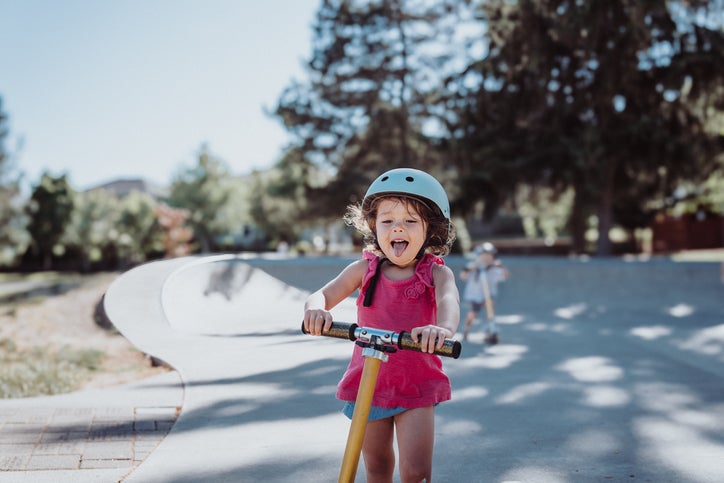
A helmet is a must for any child of any age on any object with wheels — no matter the surface or how far or close to home.
Follow helmet guidance:
- Make sure the helmet is fitted and approved.
- The helmet should be free of damage. If a child ever falls while wearing a helmet, the helmet should be replaced. The impact on the helmet from the fall may not be recognizable to the naked eye, so replace the helmet after each fall with impact to the helmet.
- Be sure the helmet is securely fastened under the chin. The two-finger method is a great way to ensure the helmet is secure. Caregivers may check by sticking their fingers underneath the strap in between the head and the ear. If they can't fit two fingers underneath, the helmet is not a good fit.
Beyond helmets, when it comes to skateboards, scooters and skates, children are more likely to fall by hitting rocks and cracks in the ground. The skateboard and scooter can also collide with the child on impact since the child can fall off of this equipment. Parents should provide knee and elbow pads when children are playing on these to help prevent injury. The caregiver should also be mindful and watch when their children are learning new skills on this equipment.
When enjoying equipment on wheels, children should preferably ride on the sidewalk or in a bike lane and not in the streets to keep them away from moving vehicles. Adult bikers may use the roads, but children should not use vehicle roadways. When children come upon a crosswalk, they need to stop and look both ways before crossing.
Boat Safety

Anytime children are around water of more than an inch or two, an adult should be available to monitor children and help prevent drowning.
Drowning is the number one cause of death in children ages one to four. Drowning can happen quickly and silently.
When children are sailing, they must wear well-fitted AUS Coast Guard approved life vests. The vest must fit based on the child's weight and height and should consider the water activity that they're going to be doing. To test the fit, parents should attempt to pull the vest over the shoulders, and if it easily slides off, the life vest needs adjustment.
While life vests help prevent drowning, if children are participating in water activities, such as jet skiing, snorkeling or paddle boarding, they must have parental supervision and be strong swimmers. Otherwise, they should not participate in these activities.
It's critical to get children into swim lessons as young as possible and keep them in lessons until they are strong swimmers.
Snake Bite Prevention
When children see snakes, they should walk away and assume they are poisonous. To avoid snake sightings, children should avoid playing in tall, grassy or heavily wooded areas. If there is fresh rain while a child is out and about, snakes are more likely to also be in areas with higher human traffic since they come out of hiding when it rains.
Poisonous snakes have a triangular-shaped head, cat eyes with a slit pupil and thicker bodies, but the snakes color is not a variable in determining if it is poisonous.
If a child is suspected to have been bitten by a snake based on two bite marks side-by-side, follow this guidance:
- Keep the bite area below the heart to prevent blood from flowing to the heart and poisoning the entire body.
- If the family is within 15 minutes of a hospital, the family can take the child to the emergency department. If they family is further away than 15 minutes, someone should call 911 and wait for emergency medical services to arrive and take the child to the hospital.
Poisonous Plant Safety
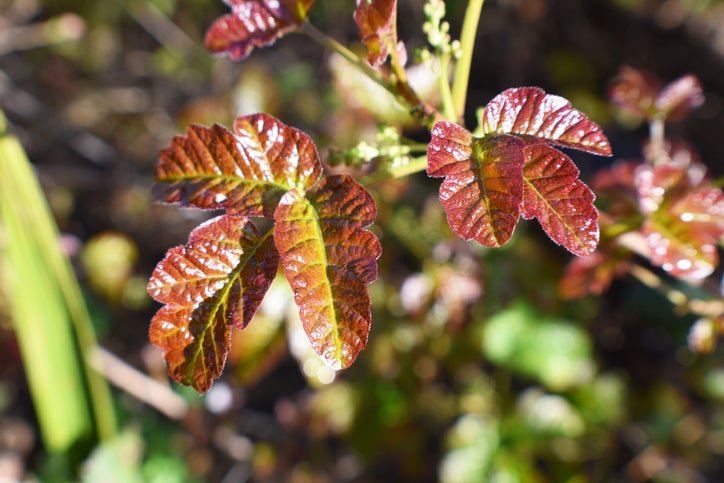
In heavily wooded areas, including backyard natural areas, there's a good chance poisonous plants may be present, including poison ivy, oak and sumac. While enjoying a hike or exploring in natural areas, it's important to wear long, breathable clothes, closed-toe shoes and socks. Families should also inspect their yards and any outdoor play areas where plants are growing.
Children should be taught the rule "Leaves of three, leave them be." Most poisonous plants are in leaves of three, and the leaves are often waxy.
About half of people who encounter poisonous plants will have an allergic reaction, including a red, swollen, pimply, itchy rash on the skin with streaks or patches on exposed areas of the skin. It's not contagious, but any clothing or even a pet that came in contact with the plant and has the sap still present must be washed and cleaned, or the poison could spread across the household.
If a caregiver believes a child has come in contact with a poisonous plant, here are actionable steps:
- Wash immediately with soap and water.
- Remove clothing and wash those in warm water.
- Treat a non-spreading rash with topical hydrocortisone cream.
- If there are signs of anaphylaxis (breathing concerns and facial swelling) a child requires immediate medical attention and should be taken to the nearest emergency department.
- If rash aggravation is such that it is interrupting a child's sleep or is spreading to the face or genital areas, the child may need to be seen by a medical provider. If unsure, parents should contact the pediatrician for guidance.
Neighborhood Play Safety
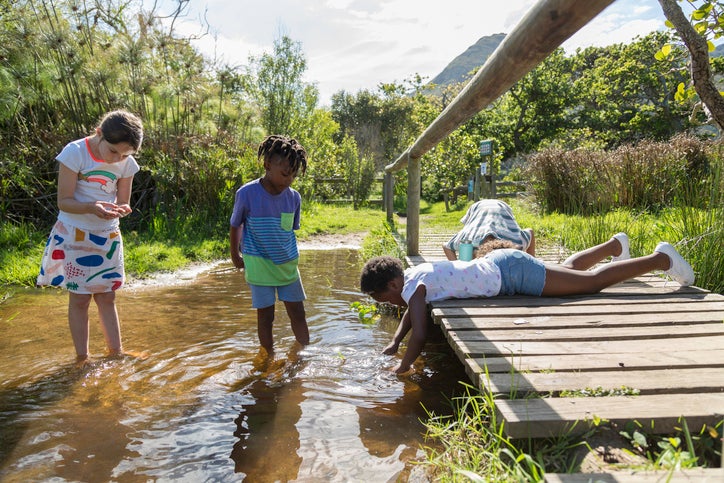
Parents should supervise children when they play outside in the neighborhood, making sure they have clear sight lines.
Streets and driveways are potentially hazardous areas. Parents should scan those areas prior to play to make sure that it is a safe area for children.
Parents need to ensure children understand traffic safety guidelines, including looking both ways when they're crossing the street, using the crosswalks and playing on sidewalks. It is also critical to enforce that children must never chase a toy or ball into the street.
It's important to discuss rules around engaging with strangers. If a stranger approaches, children must not talk to the stranger, and if the stranger attempts to chat, children should walk away and immediately alert a trusted adult.
Children enjoy exploring various parts of the neighborhood, including creeks, streams and ponds. Parental supervision is a must where there is water as children can drown in one to two inches of water. If a child falls in the water and suffers a head injury, that child can quickly drown in silence. Parents should strongly consider becoming CPR-certified in the case of any sudden emergencies that can easily arise while children are playing.
About Katherine Quinn, CPNP
 Katherine Quinn is a board-certified pediatric nurse practitioner at Pediatric Primary Care - Wake Forest Medical Park with clinical interests in caring for families and patients of all ages. She has special interests in asthma management and developmental delays. She earned her bachelor's degree in nursing from University of North Carolina Wilmington in Wilmington, NC. Quinn's nursing background includes pediatric intensive care in addition to general pediatric primary care. She went on to complete a master's of science in nursing with special focus on pediatric nurse practitioner through Duke University in Durham, NC.
Quinn partners with families and patients to support them through each milestone of childhood and adolescence. Her greatest joy is fostering a healthy lifestyle in children to carry into adulthood.
Outside of work, Quinn loves spending time with her husband and family, including her two orange cats. She enjoys trying new restaurants, gardening, completing home projects and cheering on the Carolina Hurricanes.