Hard-to-Heal Wounds Meet their Match with WakeMed Wound Care
June 10, 2026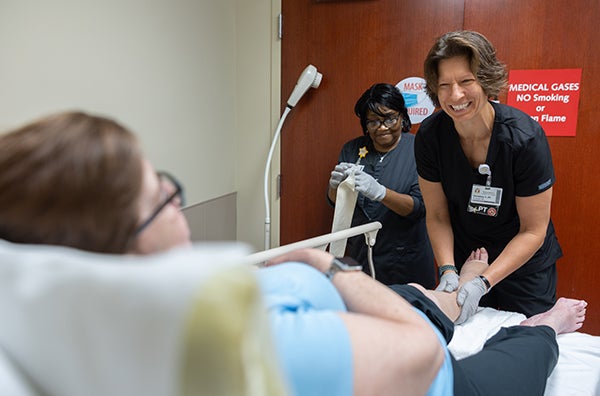
By: WakeMed Rehab & Physical Therapy
Categories: Physical Therapy, Raleigh Campus, Cary Hospital
Tags: wound care, wound care center
For patients struggling with acute or chronic wounds that are hard to heal, expert, evidence-based therapy can promote better health and an improved quality of life – and can also prevent further complications or limb loss.
Who Needs Wound Care?
Wounds that don’t heal properly are often caused by underlying conditions such as diabetes or poor circulation (like venous insufficiency). These factors can interfere with the body’s normal healing process, turning even minor wounds into serious health concerns. Other hard-to-heal wounds may result from pressure, trauma (including surgery) or infection – all of which can significantly affect a person’s health and quality of life.
WakeMed Wound Care specializes in treating non-healing and complex wounds, with the goal of preventing limb loss and optimizing outcomes. Our comprehensive centers in Cary and Raleigh provide advanced care for all types of wounds including:
- Late effects of radiation (i.e., radiation cystitis or external wound)
- Diabetic foot ulcers
- Venous ulcers
- Pressure ulcers
- Non-healing, surgical wounds
- Arterial/ischemic ulcers
- Traumatic wounds
- Infected wounds
- Crush injuries
- Compromised flaps or grafts
Effectively treating complex wounds requires a highly skilled, multidisciplinary team – including physicians, nurses, wound care specialists, physical and occupational therapists and, when needed, hyperbaric technicians.
What is Wound Care?
WakeMed Wound Care provides comprehensive treatment for hard-to-heal wounds, including wound cleaning, debridement (removal of dead tissue), negative pressure wound therapy, advanced and specialty dressings, tissue substitute applications and hyperbaric oxygen therapy. Patients also receive education on
wound care and lifestyle changes to support healing and help prevent future wounds.
Additionally, the team assists patients in obtaining the necessary supplies and equipment for home care — such as dressings, footwear, beds, wheelchairs and more.
“Education is a vital part of wound care,” says Christina Young, PT, a wound care physical therapist at WakeMed Wound Care – Raleigh. “We help patients understand what causes wounds and how factors like poor nutrition, stress, smoking and inactivity can delay healing.
We also teach them how to care for their wounds at home, what to watch for and when to contact their doctor – so they have the tools to avoid further complications.
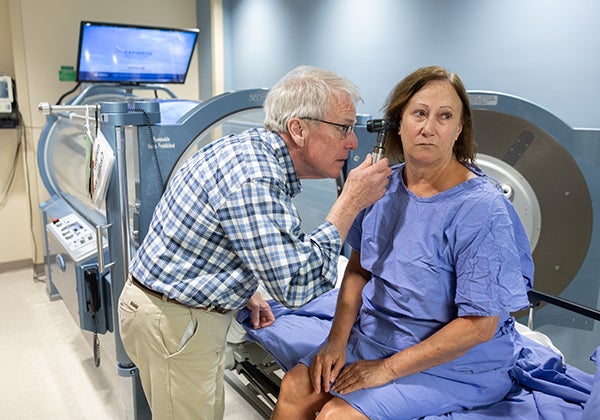
Wound Care staff and physician assist patient before starting hyperbaric oxygen therapy for a non-healing
wound.
Understanding Hyperbaric Oxygen Therapy
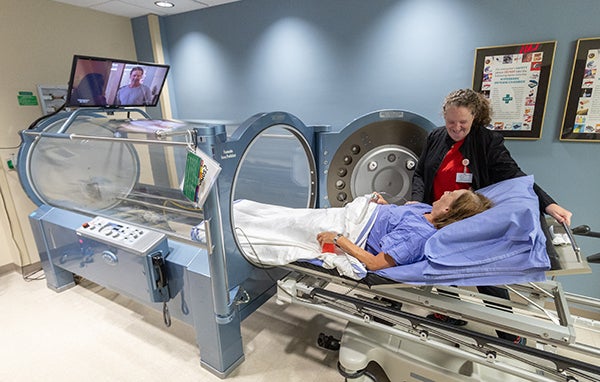
Oxygen is essential for proper wound healing. For patients who don’t respond to standard treatments,
WakeMed Wound Care offers hyperbaric oxygen therapy – a specialized treatment that delivers 100% oxygen at higher-than-normal atmospheric pressure. This increased pressure helps the blood carry more oxygen to tissues, promotes healing and activates white blood cells to fight infection.
This specialty treatment is used for specific conditions, including Wagner grade 3 diabetic wounds, traumatic limb salvage, radiation cystitis, and failed muscle flaps or skin grafts. Most patients undergo a course of 40 treatments, typically five days a week for about two hours per session over eight weeks.
“Hyperbaric oxygen therapy can be highly effective when paired with expert wound care – especially for patients who follow their care plan and make healthy lifestyle changes,” says Young. “By increasing oxygen levels in the bloodstream, it can help damaged tissue heal faster.”
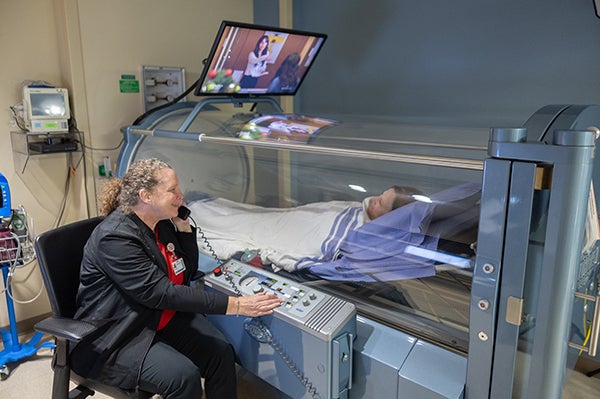
During treatment, patients relax in the chamber – watching TV or resting – while a hyperbaric specialist monitors them throughout the session to ensure safety and comfort.