Vertigo: A Dizzying Diagnosis
September 19, 2025
Have you ever done something that gave you the sensation of feeling lightheaded or dizzy? During Balance Awareness Week this third week of September, we want to share information on this dizzying diagnosis and how you can balance it safely.
According to the National Institute on Deafness and Other Communication Disorders (NIDCD), there are more than a dozen different types of balance disorders. Of these balance disorders, Benign Paroxysmal Positional Vertigo (BPPV) is the most common, causing roughly 50 percent of dizziness in older adults.
Vertigo is More Common Than You’d Think
At WakeMed, our Ear, Nose and Throat (ENT) – Head & Neck Surgery specialists commonly see patients with suspected vertigo. In fact, according to Michael Ferguson, MD, an ENT doctor and director of WakeMed ENT – Head & Neck Surgery,
"Very few patients with a chief complaint of “dizziness” actually have true vertigo."
Fortunately, certain types of vertigo can be treated reliably and on the spot, helping a large percentage of these patients. The condition can also go away on its own. Below, we address some of the most common causes, symptoms and treatment for vertigo.
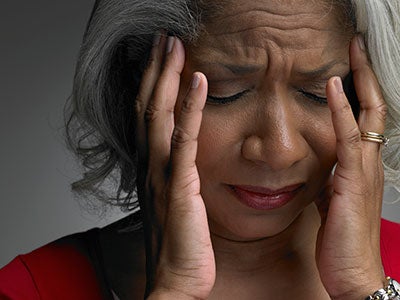
What is Vertigo?
Vertigo is a very specific sensation that the room is spinning around in circles. If we look at a symptomatic person's eyes during an episode, we can actually see the eyes darting back and forth (nystagmus).
Can vertigo have multiple causes?
YES. Vertigo can be caused by a number of things. The most common cause is BPPV. Here are other causes:
- Inflammation of the inner ear (labyrinthitis or vestibular neuronitis)
- Ménière’s Disease (associated with ringing in the ears/hearing loss)
- Head trauma
- Brain tumors
- Strokes
- Migraines
Is vertigo more common in older adults?
YES. Overall incidence of vertigo is between 5–10 percent, but this increases to roughly 40 percent in patients over the age of 40. In other words, the older we get, the more likely we are to experience an episode of vertigo.
Can stress or weather trigger a vertigo attack?
YES & NO. Dizziness/vertigo isn’t typically associated with weather changes or stress. However, vertigo IS oftentimes confused with general dizziness, imbalance, or a sense of passing out – and that can certainly be triggered by a drop in blood pressure (orthostatic hypotension) related to stress or over-activity.
When should I see a doctor for my symptoms?
IT VARIES. The following are examples of when we should DEFINITELY seek medical attention:
- Vertigo symptoms are consistently persistent for an extended period of time (hours)
- Intermittent symptoms that recur
- Other symptoms, such as hearing loss, vision changes or headaches
Is there anything I can do to manage my vertigo symptoms at home?
YES. The Epley Maneuver is a series of head movements to relieve vertigo symptoms, and it can be performed at home.
Dr. Ferguson breaks it down further:
"Imagine the balance part of the inner ear is like three hula hoops filled with motor oil. The three hoops are all oriented in three different planes and together they act like a gyroscope. The fluid inside the hoops shifts when we turn our head, and that fluid shift triggers the little nerves lining the inside of the hoops (called hair cells) to tell our brain which direction our body is moving.
"Debris or deposits can sometimes break lose in these hoops (the semicircular canals), so when we turn our head a certain direction, they float through the hoops creating all sorts of havoc and telling our brain we are whipping around in circles even though we aren’t. The Epley maneuver is a way to flush those flecks of debris (otoliths) out of the semicircular canals. It’s exactly like the little maze game we played as a kid where we try to get the little steel ball through the maze and drop it into the hole."
About Michael Ferguson, MD
 Dr. Michael Ferguson, is an ear, nose, & throat (ENT) doctor and director of WakeMed Physician Practices ENT Head & Neck Surgery. His clinical interests range from pediatric ENT, to sinus disease, thyroid surgery and cancers of the head and neck. For additional information on vertigo, or to address other ENT-related issues, schedule an appointment with Dr. Ferguson today.