Take 5 with Maternal Fetal Medicine Dietitian Gissela Banegas
August 21, 2025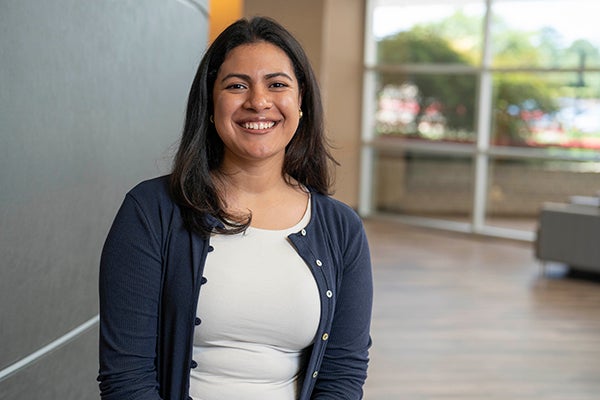
By: WakeMed Health & Hospitals
Categories: Women's, Pregnancy, diet & nutrition
Tags: Maternal Fetal Medicine, Nutrition
Gissela Banegas, WakeMed's maternal fetal medicine dietitian, radiates warmth and expertise. Specializing in fertility nutrition for all stages, her passion for women and children is evident — as she understands a mother's well-being directly impacts her child. Banegas brings to WakeMed her expert knowledge, the latest trending research and a contagious enthusiasm for this vital field.
Eager to learn how she'll support mothers, we sat down with Banegas, ready to delve into her vision and approach. We invite you to join us in getting to know this dedicated member of our WakeMed family.
Tell us about your educational background.
I attended North Carolina Central University in Durham, NC, for my bachelor's degree in nutrition and dietetics, and then completed a dietetic internship at Meredith College in Raleigh, NC.
Why did you focus on dietary needs in women's health?
I've always been pretty passionate about women's health in all stages of fertility — from pre-pregnancy and especially during pregnancy, lactation and postpartum early childhood. Plus, it is a topic of personal importance to me since I’ve had my own challenges with hormonal health. These challenges have given me a deeper understanding of just how much nutrition and lifestyle can affect everything from energy and mood, to overall reproductive health. This personal experience is what led me to dietetics. I want to offer women the kind of support I wish I had had at one point.
Ultimately, being in this field is important because maternal fetal medicine dietitians are helping moms. Secondarily, we're also helping babies' outcomes and lifetime risks for diabetes, obesity and more.
Why did you choose WakeMed for your career?
I joined WakeMed because it is a community hospital that sees diverse patient populations and offers them each the same level of comprehensive care. The fact that my position as a maternal fetal medicine dietitian even exists is a testament to WakeMed's focused care for women.
I previously worked for three years at various public health settings where, many times, pregnant patients were sent home with a diagnosis and no next steps for nutritional support. Depending on how far along in their pregnancy they were authorized for nutrition services, they were typically scheduled for one to two nutrition counseling sessions throughout the pregnancy. This meant I often only had one or two opportunities to address any nutrition-related concerns, and this often was not enough time to adequately deliver comprehensive dietary care.
What's trending in your field?
I am shoring up my understanding of the newest research related to nutritional guidelines for gestational diabetes, PCOS and pregnancy after bariatric surgery.
In particular, dietitians in our field are eager for the approval of standard continuous glucose monitoring for women diagnosed with gestational diabetes. Right now, we are waiting on updated standards from the American College of Obstetricians and Gynecologists and Americans with Disabilities Act. The current guidelines require that a woman diagnosed with gestational diabetes must do four glucose checks a day. This can be overwhelming, and someone who is pregnant may not wish to keep this up for several months. Real time data through continuous glucose monitoring could help a pregnant person understand her blood sugar levels and how food, hydration and exercise choices impact it.
Outside of work, what are your hobbies?
I enjoy reading and spending time with my family. As the oldest sister of several siblings, I spend the bulk of my free time catching up with them — as I love children. We do a lot of family hiking and swimming along with exploring other fun ways to stay active.

As a dietitian, I also like experimenting with new recipes and flavors. A particular recipe that I think is both scrumptious and healthy is the chicken thigh marinade recipe by Erin Clark at Well Plated.