Leaky Valve? Advances in Treating Mitral Valve Regurgitation
November 2, 2026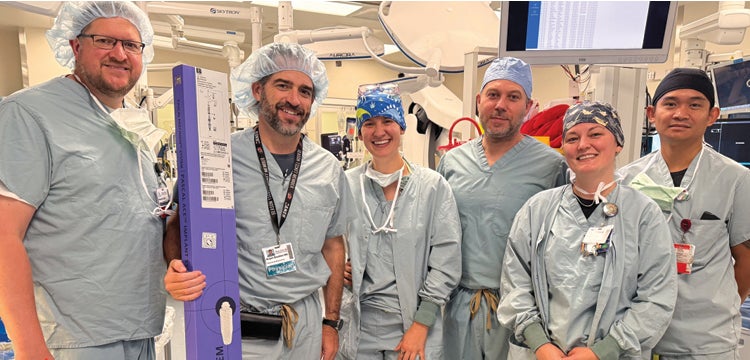
Mitral Valve Regurgitation, Explained
The heart is a complex organ made up of four chambers and four valves that support the highly-coordinated blood flow throughout the body. While the heart is responsible for pumping blood, its four valves are like doors that open and close to let blood flow into the appropriate chamber at just the right time. But, what happens when one of those doors doesn’t close properly? You get a leaky valve. Mitral valve regurgitation (also known as mitral valve insufficiency or a leaky mitral valve) is the most common heart valve disease and occurs when the mitral valve doesn’t close properly. This malfunction allows blood to leak back into the left atrium when it should instead be headed forward to the left ventricle through the aortic valve and into the aorta. This backward blood flow causes the heart to work harder, which can lead to serious problems such as heart failure, arrhythmia, blood clots and stroke.
Oftentimes, mitral valve regurgitation goes undetected until it has progressed significantly. Patients don’t realize there’s a problem until they start experiencing symptoms such as shortness of breath, fatigue, lightheadedness, palpitations, or swelling in the legs, feet or hands. In other cases, it may present as a heart murmur during a routine physical exam. A diagnosis can only be confirmed after a full cardiology exam and workup including an echocardiogram, which is an image created using sound waves, showing the heart’s structure and function. Other imaging tests can help physicians better assess the severity of the disease.
Primary MR, also known as degenerative mitral valve regurgitation, involves structural abnormalities in the valve leaflets and can occur at any age. The mitral valve is comprised of two leaflets, which are thin, flexible flaps of tissue. Common causes of degenerative MR include congenital valve defects, connective tissue disorders, mitral valve prolapse or rheumatic heart disease. But it can also occur due to regular ‘wear and tear,’ caused by the leaflets opening and closing hundreds of thousands of times each day.
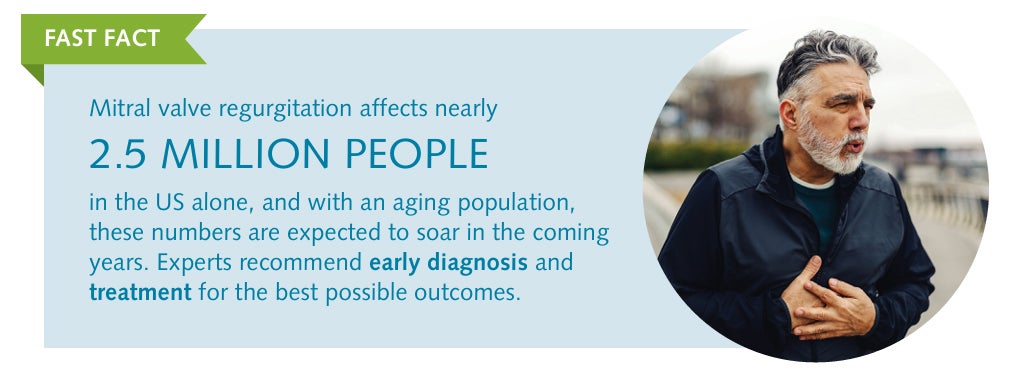
Primary MR has become increasingly common among our aging population, with studies suggesting that more than 10 percent of individuals aged 75 and over may suffer from the condition.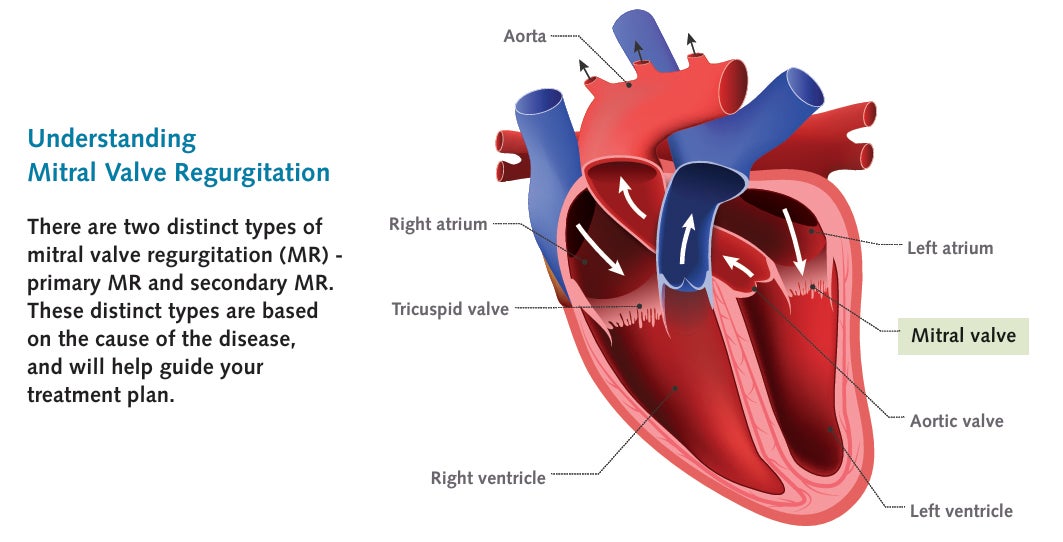
There are no medical therapies that can address the anatomical problems that cause primary MR. And, while medical therapies for symptom management and lifestyle changes may be recommended, their efficacy may be limited. Patients are generally monitored by a cardiologist over time to track disease progression, with routine testing and cardiovascular imaging.
For Primary MR, Is Surgery the Best Option?
Surgery is often the last resort for treating chronic health problems – generally indicated after years of conservative therapy and symptom progression. However, for patients with severe MR, early surgical intervention is often the best way to treat it, even for those who experience no symptoms. That’s because mitral valve surgery is the only treatment for severe MR that’s been shown to improve symptoms and prevent heart failure. Furthermore, a 2020 research study published in The Annals of Thoracic Surgery found that patients who undergo early repair or replacement have better long-term survival rates. Secondary MR, also known as functional mitral valve regurgitation, results from physical changes affecting the left ventricle, such as those caused by cardiomyopathy or scar tissue after a heart attack.
These problems cause the valve leaflets to pull apart, which keeps them from fully closing, leading to backward blood flow. Secondary MR is more common in older patients and often occurs in patients with heart failure.
Treating Secondary MR Starts with Conservative Therapies
For patients with secondary MR, medical therapy and lifestyle modifications are generally recommended first. Depending on the patient’s condition, there are dozens of medication options, including those to help lower blood pressure, control blood sugar and treat heart failure. Valve surgery is generally indicated only after a combination of these treatments have been tried and exhausted.
Mitral Valve: to Repair or Replace?
For WakeMed Heart & Vascular patients with advanced mitral valve regurgitation, treatment generally begins with a referral to WakeMed’s Structural Heart team. There, a cardiologist, who has subspecialty training in structural heart disease, consults with each patient giving them knowledge of their heart’s physical architecture, inner workings and treatment guidance. When surgery is indicated, they work hand-in-hand with the WakeMed Heart & Vascular - Cardiovascular & Thoracic Surgery team to develop a plan of care based on the patient’s symptoms and severity of valvular disease.
Valve repair is typically the first choice and can help many patients completely resolve their symptoms. For some patients, a valve replacement is needed to address either severe symptoms or high-risk structural issues that can’t be resolved with a repair. For patients undergoing other heart surgeries, a valve replacement can be performed at the same time to streamline treatment and recovery. Replacement options include a mechanical valve, typically indicated in younger patients due to long-term durability or a biological valve, which generally lasts just 10 to 15 years.
WakeMed Pioneers a New Option for Primary MR Valve Repair
Both valve repair and replacement procedures can be performed using newer, minimally invasive options or traditional open surgical techniques. Surgical selection and eligibility decisions are based on a range of factors, including health history, age, disease classification and severity, as well as complex anatomical considerations.
“Mitral valve regurgitation can have a significant impact on an individual’s quality of life, and unfortunately, some patients aren’t good candidates for open-surgery repair,” explains Dr. Andrew Sampson. “New minimally invasive tools such as these allow us to give more patients access to the significant relief that a valve repair procedure can offer. As the field continues to advance, we’re able to make a real difference in overall health, longevity and quality of life for patients we wouldn’t have been able to treat just 10 years ago.”
The latest advancement for treating mitral valve regurgitation is a transcatheter mitral valve repair (TMVr), sometimes called a transcatheter end-to-edge repair (TEER), performed using a new device called the PASCAL transcatheter valve repair system. During this procedure, a small implant is inserted via a catheter through the femoral vein in the leg to reach the mitral valve. The device is attached to the leaflets of the mitral valve and uses a spacer to block the backward blood flow. It is performed in a hybrid operating room, which is a state-of-the-art procedure space that combines the most advanced imaging technology for precise visualization along with traditional operating room tools and equipment.
WakeMed Heart & Vascular’s Dr. Andrew Sampson and Dr. Bryon Boulton performed the first case using the PASCAL system at the WakeMed Heart Center in early May.
This blog is adapted from Heart to Heart Magazine. Subscribe today.