Jairo McMican: A Survivor's Story of a Near-Fatal Infection
October 2, 2025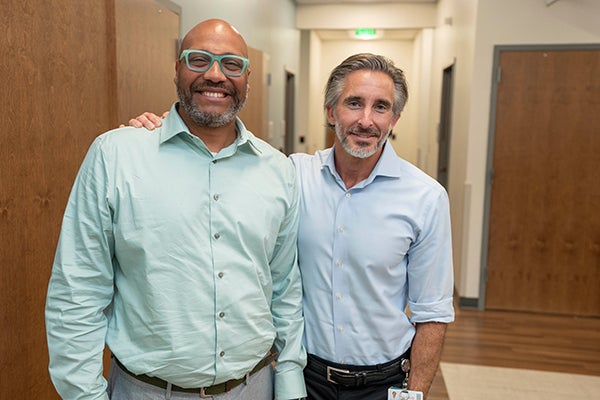
Categories: Wake Orthopaedics, Cary Hospital, Foundation, Stories
On February 14, 2024, Jairo McMican — a hardworking husband, father of three, doctoral student and full-time employee, was in Orlando, FL, attending a conference.
Sudden Pain and Swelling
Suddenly, while in session, his left ankle began to hurt.
"I was thinking, 'Man, did I turn my ankle or something? This aging business is for the birds.' I was listening to a speaker and out of the blue, it felt worse and worse."
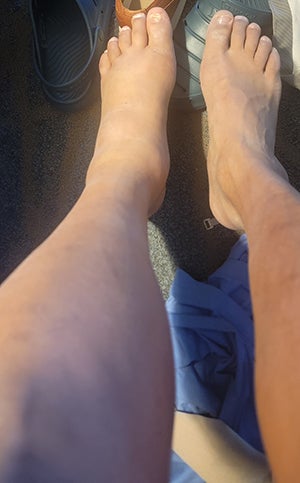
The session ended within 30 minutes, and Jairo could think of nothing other than his ankle; it was also beginning to swell. When he stood to walk, he could only apply light pressure, so he limped out of the conference. In the brief time it took him to return to his hotel room, he could not bear any weight on his ankle, and he had to hop into his room using his right leg.
"I called a friend who brought me pain medication, but I was in agony all night. I could not go to sleep."
The next morning, with pain and swelling steadily increasing, Jairo headed to the nearest Orlando emergency room.
Providers examined him and saw no signs of a bug bite, scrape, cut or scratch. They took x-rays and informed Jairo that he had a bone spur. He was told it occurred as a result of old athletic injuries that had been aggravated. They gave him muscle relaxers and discharged him.
"I kept trying to advocate for myself. I knew it wasn't an old injury — as I have broken many bones and partially torn some ligaments while playing sports, and this felt different. The muscle relaxers they provided allowed me to get about two hours of relief, but I could sleep, so I decided to head back to Raleigh, NC."
A Brutal Plane Ride Back to Raleigh
Jairo arrived in Raleigh at around 8 pm on February 16. His wife, Jordan, picked him up and told him they were heading straightway to WakeMed Cary Hospital Emergency Department.
"The plane ride had been horrific. I was seated in the very back of the plane because I was on crutches. I had to wait for every other passenger to deplane before I could get off. By then, the pain was intolerable, likely as a result of the altitude. My ankle was now completely swollen, so my leg looked like a tree trunk. I told my wife I wanted to head home, get some rest and go to the doctor the next day, but she insisted we go that night."
Comprehensive, Reassuring Care at WakeMed
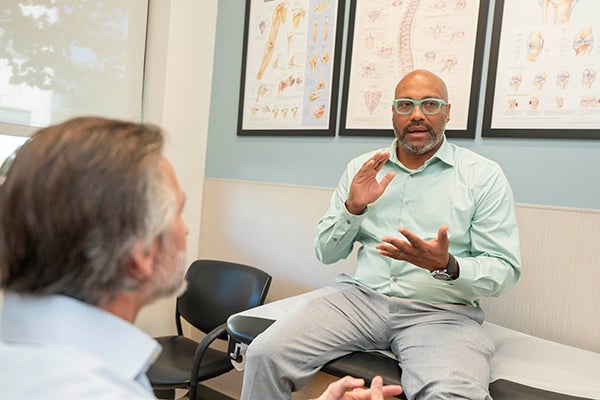
Upon arrival at WakeMed, emergency department staff admitted Jairo to a patient room. A physician ran diagnostic tests, including magnetic resonance imaging (MRI). With each test returning normal results, at 4 am they informed him that they were going to test for an infection.
"An on-call orthopaedic community doctor came in with a needle about as long as my index finger. He told me they were going to inject it into my ankle and that it would hurt a lot, but it would help them determine if I had an infection. As soon as the doctor began pulling out the syringe, he saw it was, indeed, infected, but he had to run tests to confirm the type."
The Test Results No One Suspected
Results returned — to the surprise of all — that Jairo had streptococcus pneumoniae. It is a bacterium often found in the respiratory tracts of healthy people, especially children. It spreads easily through respiratory droplets when someone who is infected coughs or sneezes. While many individuals carry these bacteria, without showing any symptoms, those with weakened immune systems — including the elderly, young kids and people with chronic illnesses — are more susceptible to serious infections.
Later that same day, Michael Ruffolo, MD, a fellowship-trained Wake Orthopaedics surgeon, informed Jairo that he and his team would perform surgery to remove the infection.
Dr. Ruffolo comments, "I remember the night I met Jairo very clearly, and it went on to be one of the most memorable and rewarding experiences of my career. When I was originally called about him, it was portrayed as a relatively straight forward infection in the ankle joint, which is not usually too serious as long as it is identified and treated (with surgery) quickly. When I reviewed his imaging, there were a couple very subtle tell-tale signs at the far edges of the MRI that hinted the infection may have spread beyond his ankle. Upon meeting him, his ankle was certainly the focal point; however, his calf was much more swollen than I would have expected for such an infection, which clued me in that there may have been more going on than we originally expected. I warned him that it is possible the infection has spread, and we may need to extend the incision a little beyond the ankle."
The surgery, initially slated for one hour, wound up taking four hours. Dr. Ruffolo had the area carefully sanitized and numbed around the left ankle and leg with an anesthetic. He then performed debridement to effectively remove contaminated and dead tissue.
When Jairo awoke that evening, Dr. Ruffolo visited to share details of the surgery and what to expect in recovery.
Dr. Ruffolo explains, "During surgery, I made the incisions I would typically do to wash out the ankle joint and the other small joints of the hindfoot. The infection was fairly extensive in this area, but we were able to get it cleaned out very well. However, based on his exam and imaging, I was concerned that some infection remained. I made the decision to extend his incision past his ankle and up his leg to make absolutely sure we did not miss anything. Almost immediately after extending the incision, pus started pouring out from higher up in his leg, confirming his infection was much worse than we expected. I extended his incision up his leg several inches at a time, hoping to reach healthy non-infected tissue. We kept extending the incision until we finally reached the end of the infection, just below the knee. At this point we performed an extensive and thorough debridement, working around the nerves and blood vessels in the leg to remove all infected and necrotic tissue. We closed all incisions, leaving antibiotic powder and drains to help with any residual infection."
Cleared in the Nick of Time: An Infection Just Hours from Deadly Sepsis
Jairo says of the conversation with Dr. Ruffolo, "He said to me, 'This was probably the worst infection I've ever cleared without taking the leg.' He explained that he kept cutting, and more infection kept emerging. He complimented my wife on insisting that we come directly to the emergency department after I arrived in Raleigh since had I waited another day, I would likely have developed sepsis and would be fighting for my life."
A variety of specialists in infectious disease, ontology, internal medicine, general surgery, physical therapy and occupational therapy stopped by to gather information, pinpointing the exact cause for the infection. They offered Jairo an opportunity to participate in a case study. He declined — though in awe of their thorough investigative work.
“I am fortunate to have had the level of care I received at WakeMed. Without it, I know I would not have recovered as quickly.”
A Slow March Toward Recovery
The care team inserted drainage tubes to remove any residual toxins. They also monitored Jairo's blood daily to ensure there was no hidden infection.
Amazingly, Jairo healed with three noticeable incisions on his leg.
"I was in shock and reeling from the fact that I could not only have lost my leg, but I could also have lost my life — leaving behind my wife and three children. I was very emotional, and the care team at WakeMed handled it all so well. My first nurse came in lighthearted and joking. I really appreciated and needed the interaction to put my mind at ease."
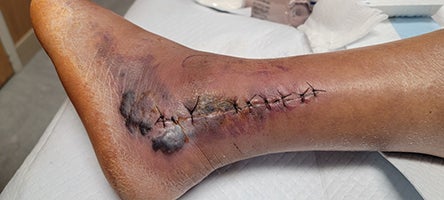
Jairo remained in the hospital after surgery as the team continued to monitor him closely. At one point, they observed signs of infection in his blood again. This extended his stay from five days to ten.
Meanwhile, his wife traveled back and forth — visiting Jairo while working and caring for their family — with the support of her mom and friends.
Dr. Ruffolo notes, "Post operatively we repeated imaging of his whole leg, and thankfully it appeared that the entire infection was controlled. This was the beginning of his long road to recovery, letting the antibiotics work and allowing his wounds to heal. Based on the severity of his infection and the damage already done, I wasn’t sure what to expect on his recovery and the long-term function of his leg. He went on to heal all his wounds and eliminated his infection without any additional surgeries. For months he worked diligently with physical therapy and ultimately made a remarkable recovery."
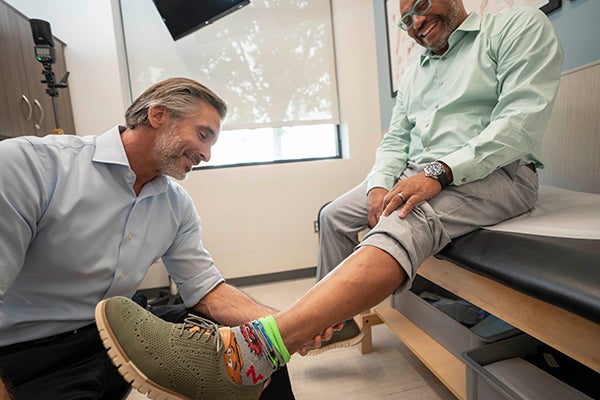
Unparalleled Patient Care the Wake Way
Reflecting on the surreal nature of the experience, Jairo was overcome with gratitude for his wife and the exceptional and consistent care he received.
"I extend my gratitude to my many nurses, including Marley for her contagious smile and gentle demeanor that never failed to lift my spirits. I thank Bruce for outstanding care and unwavering sense of humor. Andy was meticulous and thorough with great attention to detail. Tamil went above and beyond to help me during one of the most challenging nights of my stay. Her compassion, empathy and expertise were a source of comfort and reassurance when I was in great pain. Josh was personable and made me feel valued and cared for. I also had excellent nursing assistants, including Ana who was kind, compassionate and offered meaningful conversation. I appreciate Theresa for making my time in the hospital easier. Wesley was such a cool person to be around. He was positive, professional and dedicated to excellence. Most of all, I am grateful to Dr. Ruffolo for saving my life. His bedside manner was very approachable and kind. I will never forget what he did for me. If anyone ever needs an orthopaedic surgeon, I recommend him completely. He is the best. At that time, I'd been busy doing so many different things, always on the go. While in the hospital, I realized what really mattered, and it was none of my achievements I was pursuing so hard. Being so suddenly and severely ill and undergoing surgery for the first time in my life brought on many emotions. These care team members not only attended to my needs, but they also made me consider what was truly important in life."
On February 26, Jairo was finally discharged home with a peripherally-inserted central catheter (PICC) line — a long, flexible tube inserted into his vein in his upper arm to administer intravenous (IV) drugs. He was unable to put any weight on his ankle as it was still sore and weak. He'd also lost 30 pounds while fighting the infection. He was grateful to be alive and home with his family.
Reflecting on a warm provider and patient experience, Dr. Ruffolo says, "Jairo is one of the friendliest and nicest people I've ever met. He is someone I felt I'd been friends with for years, even minutes after meeting him. With a young family and kids around the same age as mine, it was especially easy to see the importance of saving his life and leg. We don’t typically see infections this severe in such young and healthy individuals, which makes cases like this particularly meaningful. Jairo was probably hours away from losing his leg, and a day or two from losing his life. I am so thankful that we were able to save his leg and that he made such an outstanding recovery. It was an absolute honor to be part of the team that cared for him and gave him the opportunity to live a normal life with his wife and young children."
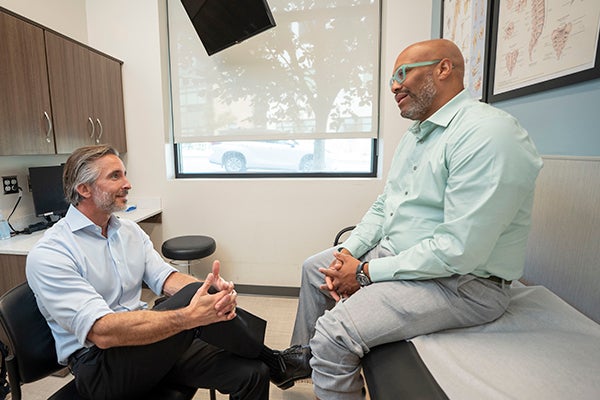
A Reminder of What Truly Matters in Life
Remembering that fateful season, Jairo offers, "I was humbled when I arrived home because I was very weak. I couldn't even get up the steps without my wife's assistance. My wife chided me that I was not as strong as I thought, and I appreciated her help so much. To this day, she still massages the area to help it feel better when I've overexerted myself."
Jairo has now returned to work and to his various activities, moving at a slower pace.
"It swells every now and then if I'm doing too much. Yet, I've returned to yard work, joint-friendly exercise, soccer and basketball assistant coaching, woodwork and my employment. I tell my colleagues that I'm temporarily able-bodied to remind myself that using my limbs is a blessing I'll never take for granted again."
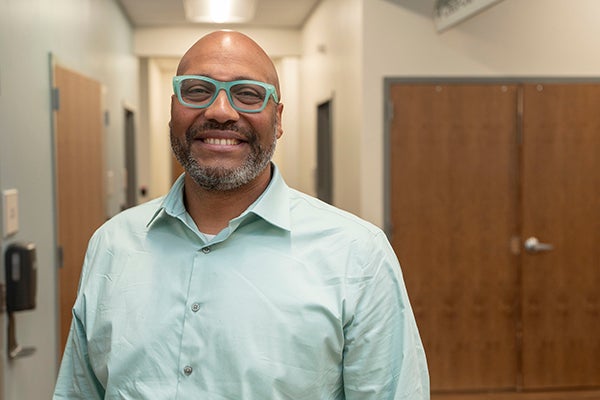
About WakeMed Cary Hospital Emergency Department
WakeMed Cary Hospital features a full-service, 24-hour emergency department where patients of all ages can receive high-level emergency care. Backed by WakeMed Children's and Wake County's only Level 1 Trauma Center, our doctors, nurses and specialists are ready at a moment's notice to provide the care you and your family need and deserve.
- Cary Hospital Emergency Department Features:
- Nationally Accredited Chest Pain Center
- Primary Stroke Center
- Level III Trauma Center
- Minor Procedure and Triage Rooms
- Board-Certified Emergency Medicine Physicians
- Access to specialist as needed
- 24-hour support from Western Wake County’s only inpatient hospital
About Wake Orthopaedics
Welcome to Wake Orthopaedics where our orthopaedic surgeons and specialists offer the highest quality care for pediatric and adult patients. Our practices provide a full range of orthopaedic services including advanced diagnostic imaging, innovative treatment options, minimally invasive and traditional procedures, and rehabilitation services. Whether it be recovering from a broken bone, joint replacement surgery, a sports injury or a fracture – our goal is to get you back to doing the things you love.