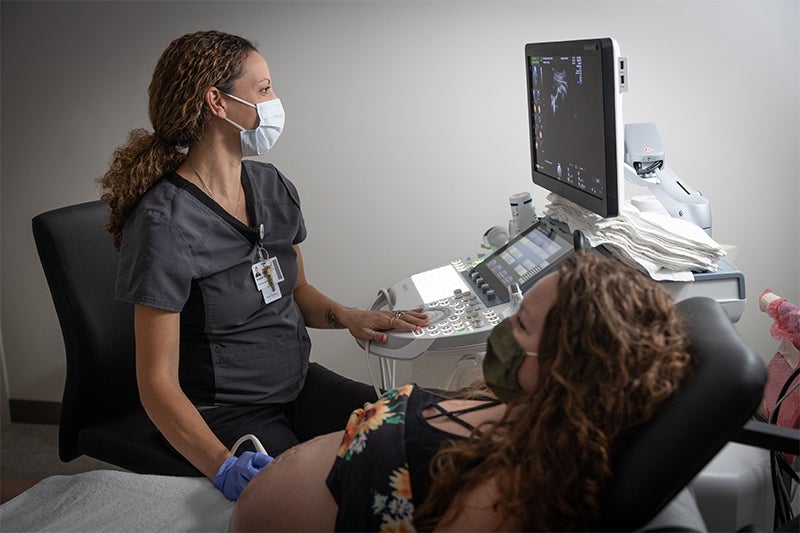
Our team is made up of:
- Maternal-Fetal Medicine Doctors
- Genetic Counselors
- Sonographers
- Nurses
- Patient Account Representatives
- Physician Assistant & Certified Diabetes Education and Care Specialist
- Registered Dietitian
What does a maternal fetal medicine doctor do?
A maternal fetal medicine (MFM) doctor (also known as a perinatologist) is an obstetrician who has two to three years of additional education and training in managing high-risk pregnancies. MFM doctors specialize in diagnosing and treating conditions of the pregnant woman and/or her pregnancy. By working with general obstetricians to treat these conditions, MFM doctors aim for the healthiest outcome possible for both mother and baby.
A woman may be referred to an MFM doctor when:
- Her pregnancy is at an increased risk for problems (i.e. a twin or triplet pregnancy, prior pregnancy loss)
- Her pregnancy is at increased risk for having a birth defect or genetic condition due to family history, medication exposure or age
- An abnormality is identified through ultrasound or a genetic screening test
- She has a history of major medical conditions (i.e. high blood pressure, diabetes, heart disease, kidney disease, autoimmune disorders, genetic conditions)
- She needs diagnostic or therapeutic procedures during pregnancy that require specialized care
Some of the specialized procedures that our MFM doctors perform include advanced diagnostic ultrasound, fetal echocardiogram, fetal Doppler studies, chorionic villus sampling (CVS), amniocentesis, intrauterine blood transfusion, and transvaginal or transabdominal cervical cerclage. We also see women prior to conception (before a pregnancy starts) to help them prepare for the healthiest pregnancy possible.
Learn more about our cervical insufficiency services.
What does a genetic counselor do?
A genetic counselor is a healthcare provider who has advanced graduate training in the areas of medical genetics and counseling. Prenatal genetic counselors specialize in helping women and their families understand medical information as it relates to the health of their pregnancy or future pregnancy.
There are many types of genetic tests available that can provide information about a current or future pregnancy. Genetic counselors explain the benefits, risks and limitations of these tests to help women decide whether to undergo testing. When a woman decides to undergo genetic testing, a genetic counselor explains the test results and discusses if other tests can/should be considered to gather more information.
Genetic counselors also evaluate a woman’s family medical history to determine whether a current or future pregnancy has a higher or lower chance of having an inherited condition or birth defect. In most cases, our genetic counselors can provide reassurance that a current or future pregnancy will be healthy. When a pregnancy is determined to have a genetic condition or birth defect, our genetic counselors provide personalized guidance and support to the pregnant woman and her family, from diagnosis through delivery.
A woman may be referred to a genetic counselor before or during pregnancy when:
- She has questions about genetic testing, regardless of her age
- She has a prior child with, or a family history of, a genetic condition or birth defect
- She has a medical condition or an exposure (i.e. medication, radiation, etc.) that may increase the risk for pregnancy complications
- She has an abnormal genetic screening test result or ultrasound finding
- She has experienced several pregnancy losses
Learn more about genetic counseling services.
What does a diagnostic medical sonographer do?
A diagnostic medical sonographer, also known as a sonographer, is a healthcare provider who specializes in the application of ultrasound to produce sonograms. Sonograms are images of fetal anatomy that assist the maternal fetal medicine doctors in diagnosing and treating medical conditions affecting pregnancy.
Our sonographers are specialty trained and licensed in general sonography, vascular sonography, obstetrics & gynecology and fetal echocardiography. All of our sonographers are also experienced in the specialty of Maternal-Fetal Medicine and work collaboratively with genetic counselors and maternal fetal medicine doctors to provide the highest quality care and expertise in the diagnosis of fetal abnormalities and genetic conditions.
What does a maternal fetal medicine nurse do?
The maternal fetal medicine (MFM) nurse is a healthcare provider who performs non-stress tests (NSTs). When a blood test is desired by a patient or recommended by the MFM doctor, the MFM nurse draws the blood and orders the test.
What does a patient account representative do?
A patient account representative is a clerical assistant who specializes in the patient registration process. This process includes scheduling appointments, verifying patient identity, ensuring the medical record contains accurate patient contact and insurance information, and answering patient phone calls.
What does a physician assistant do?
Our physician assistant works in collaboration with the MFM doctors to manage high risk conditions of pregnancy, such as diabetes and high blood pressure by ordering diagnostic tests, performing exams, providing education, offering treatments and prescribing medications.
A woman may be referred to our physician assistant for the following reasons:
- She has been diagnosed with gestational diabetes.
- She has pre-existing diabetes and is pregnant or planning to become pregnant.
- She has high blood sugars and needs assistance with more intensive medical management, including close blood glucose monitoring, support for a balanced diet or medication administration.
- She has pre-existing diabetes, has recently delivered a baby and needs assistance with diabetes management.
- She is interested in using continuous glucose monitoring or is wearing an insulin pump.
What does a dietitian do?
A dietitian is a nutrition expert who helps people use food or nutrition to support their health and health goals. Registered dietitians assess medical history, labs and lifestyle to help create strategies that support health goals by using evidence-based recommendations that are realistic, sustainable and tailored to each individual's personal preferences and cultural foods.
A woman may be referred to our MFM dietitian for the following reasons:
- She has been diagnosed with gestational diabetes.
- She has pre-existing diabetes/pre-diabetes in pregnancy.
- She has abnormal glucose tolerance.
- She is experiencing poor/inadequate weight gain during pregnancy.
- She has a history of bariatric surgery or malabsorptive disorders.
- She has multiple gestational pregnancy.
- She needs to optimize nutrition before conception for pre-existing challenges, such as polycystic ovarian syndrome (PCOS).